I wrote this a few days ago…but the wifi at my BnB wouldn’t let me upload it. And wifi was non-existent at my first hotel in the Alps….So…it’s a few days late.
After spending the night in Basel at that beautiful hotel, I boarded the train headed to Ronchamp, France. A few train transfers at stations so small and empty I was the only one there for a time until the next train showed up.
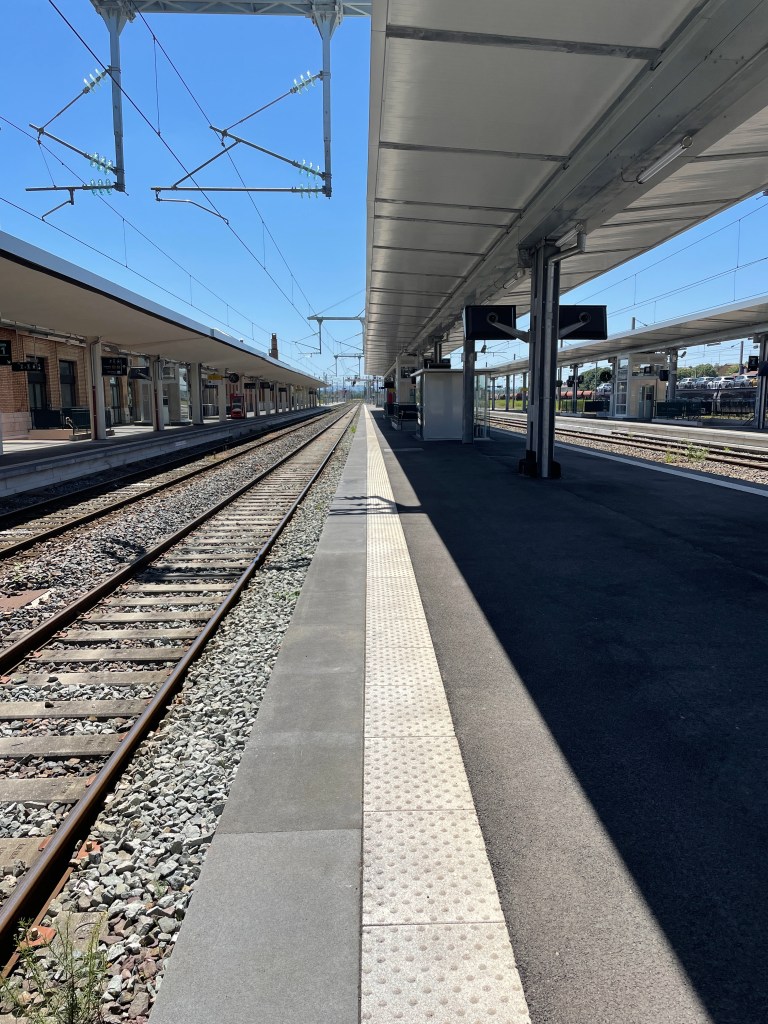
Finally, I make it to Ronchamp, surprisingly without any troubles. I get off the train at a station that is one tiny building with a sign. I literally walked off the platform to a gravel path in the French countryside. There are already signs pointing to what it is I’m here to see: Chapelle Notre Dame du Haut.
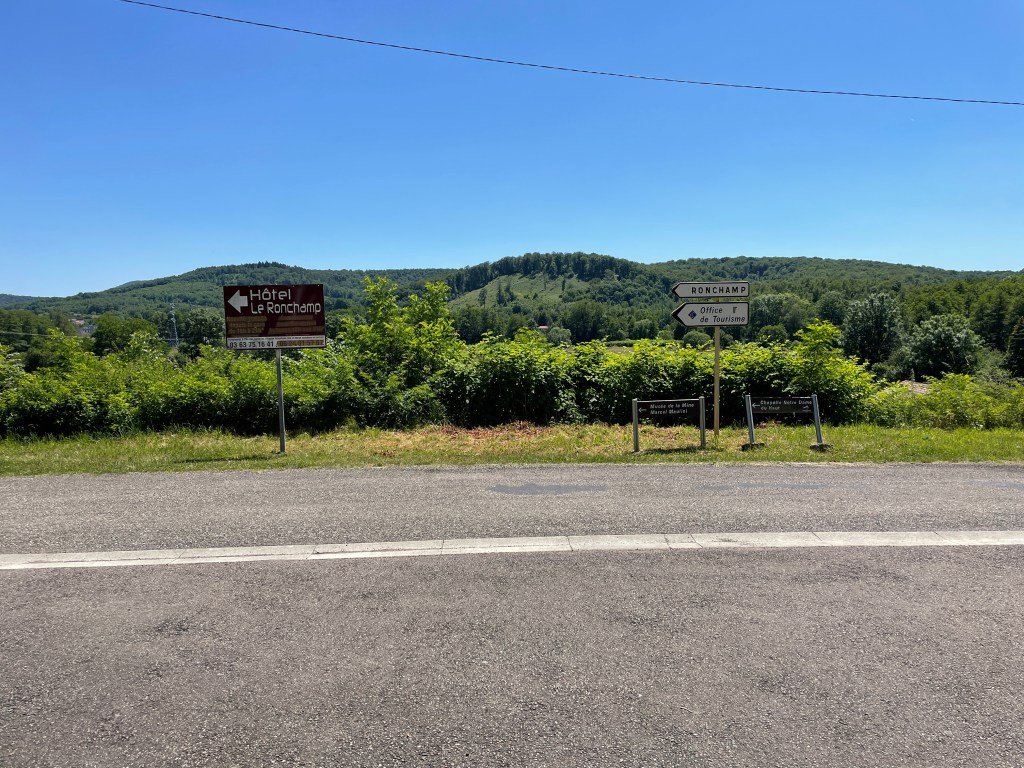
When I was planning this trip, there were a few pieces of architecture I knew I had to see. Scarpa’s Tomba Brion. Zumthor’s Therme Vals. And this, Le Corbusier’s Notre Dame du Haut. All a bit off the beaten path, a very conscious and rather determined effort to get to them.
I obviously love Scarpa’s work. And Zumthor, good lord. His writing too. I used his words quite a bit in my thesis. However, I’ve always had a strange, love-mostly hate relationship with Le Corbusier (I know, I’m speaking architectural sacrilege).
I remember learning about him for the first time. And then throughout architecture school. His writings and architecture set the path for Modernism. Machines for living and working. Designs inspired by ocean liners, cars, factories. His five tenets of architecture: building raised on pilotis, free design of the ground plan, free design of the facade, horizontal windows, and a roof garden. The foundation of Modern Architecture. All used masterfully in the Villa Savoye. The Modulor: a “universal” system of proportion based on the height of a man with his arm raised, which was used in most of his work. And don’t forget the Ville Radieuse, the urban design for a city made of sixty-story tall towers, all aligned and ordered, raised on pilotis to maximize the green space, with roof gardens.
Ok…
I loved Modern Architecture. But for some reason I hated this. Hated the idea of living in a machine. Hated the way the Villa Savoye looked. Completely hated the idea of the Ville Radieuse. What a dead city! I don’t enjoy the idea of inhabiting an ocean liner. Who on earth wants to live like that? And the five tenets? Those? Those are the components that define your design? Really? Just those five things, and you’ve got Modern Architecture. Regardless of place, regardless of context, history, culture, this is it. No grand manipulation of light, just horizontal windows. And the Modulor, proportions based on a man with his arm raised. My proportions (and those of most of us) do not match the proportions of this particular man he chose. I thought I was supposed to love it, but I did not.
I do understand I am looking back at this through the lens of years where I have seen his concepts bastardized by architects across time looking for a stylistic copy. Something to make it “Modern”. In his time, this was ground-breaking. Revolutionary. I still hated it. Perhaps it had to start somewhere.
Inspired by the machine age, and looking for a purity in architecture and in society, in a time where society was quite turbulent, Le Corbusier set out to create a new architecture. One that relieved society of its ills. Streamlined living. Created unity and uniformity in the city. However, this was only visual uniformity. Uniformity of form. There was no mention of experience. Real human experience. And I felt like I could see straight through it. Why couldn’t he?
This was even before I wrote my thesis. In graduate school, my design manifesto set out a path to reconnect people and their environments. A connection to place, to the earth, to the seasons, to the physical sensations of space. To reconstruct our image of the ideal. There is no one-size-fits-all in architecture. People are inherently complex, and our architecture should have elements of that. Our places should reflect that. And to redefine our role as architects and designers. We are not simply designing buildings, we are creating place. Connecting to people, the environment, culture, history, politics, physical space, art, the list goes on. Places for man’s physical existence on earth. A chance to connect to that lived experience. And perhaps lift it to a spiritual height. We have this responsibility to those who dwell in our buildings.
I felt this was exactly against what Le Corbusier was working toward. And somehow I knew it early in my architectural education.
In graduate school I read a book that changed my perspective on architecture, Jeremy Till’s Architecture Depends. In the first few chapters he defined contingency in architecture as “quite simply, the fact that things could be otherwise than they are.” Quite simply, in a field that likes to wield control, we, as architects, have none. People will be as they are. And will respond to their environment with all that they are. With every part of themselves that they bring. A complexity. A beautiful complexity.
This was a shock to the system. After years of school, I suddenly had a realization. Perhaps I was to provide opportunities in space. Chances to create Place. I, as architect, could not create Place. People create Place with all of their beautiful complexity. Give others, those who dwell, the opportunity to see, and let them create Place.
Till also talked about Le Corbusier and the global culture shifts after World War I and World War II, the effects of this instability on Architecture, and the desire to create stability. As the social theorist Zygmunt Bauman says about Modernism, “the will to order arose out of a fear of disorder.” And this fear left the people vulnerable to the illusion of order. And thus, the Modernists drew a clear comparison from the purity of buildings to the purity of society. Think Adolf Loos “Ornament and Crime.”
Bauman says that Le Corbusier is not the inventor of Modern Architecture, instead “he is a symptom, not a cause.” Both society and architect were moving together toward this idea of purity. And as Till says, “to achieve order one has to eliminate the other of order, but the other of order can never be fully erased.” And as I wrote in my thesis, contingency and order exist as complementary forces, constantly acting in each level of collective reality. To have and desire order is to know and understand contingency; they inherently exist for one another. The sharper the corner, the easier for it to be chipped. The smoother the surface, the easier to see imperfections. As Till says, “the whiter the wall, the quicker it succumbs to dirt.”
Maybe this is why I never enjoyed Le Corbusier’s writings or early work. How prideful. To think you could purify life by purifying architecture. By streamlining living and creating “machines for living.” By ordering the city. My humanness and my love for all of my fellow humans didn’t like this idea much.
And then that this idea was carried out in the worst ways throughout history. This is why architect Michael Ford says that Le Corbusier is the father of hip hop. The comparison of his Ville Radieuse and the Projects built all over the country are startling. Ford says, “Hip-hop is a culture curated mostly by African-American and Latino youth as a response to challenging economic, political, and physical environments.” Those physical environments modeled after some of the tenets of Modern Architecture. A failure to our people.
Maybe this is why I never liked his writings, why I never understood the five principles, why I always hated the Ville Radieuse. Because I had seen the consequences of it.
But the Notre Dame du Haut was always different for me–I loved it. How did he arrive here? We never really talked about his transition through time. Just, here are the five principles, the Domino House, Villa Savoye, Ville Radieuse, and then BAM! Notre Dame du Haut. You’re welcome.
When I got into town I started making the trek to my bed and breakfast. I always like to look around google earth when I’m going somewhere new. When only a few options for hotels popped up, I clicked on street view. Oh god, where was I going…?

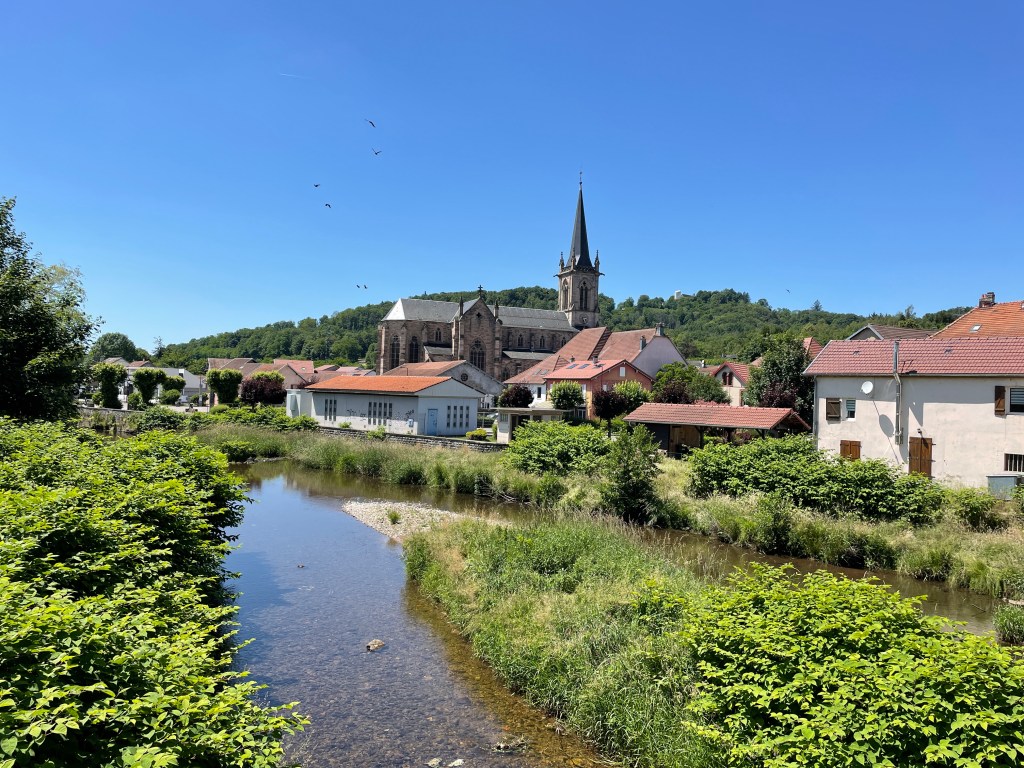
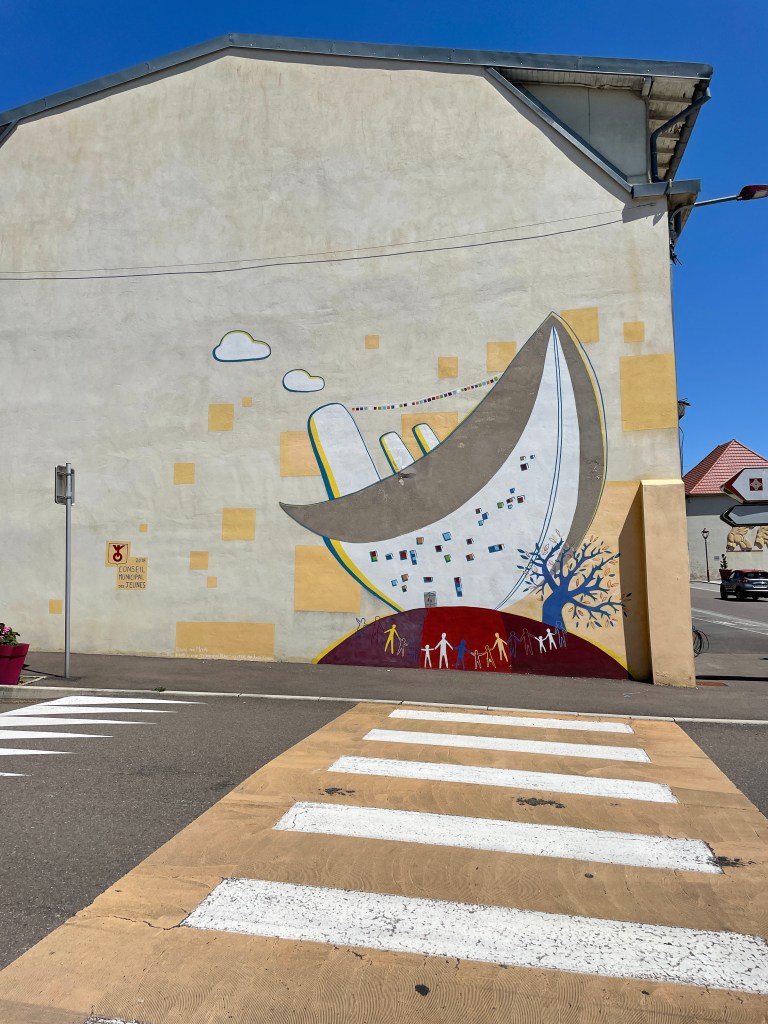
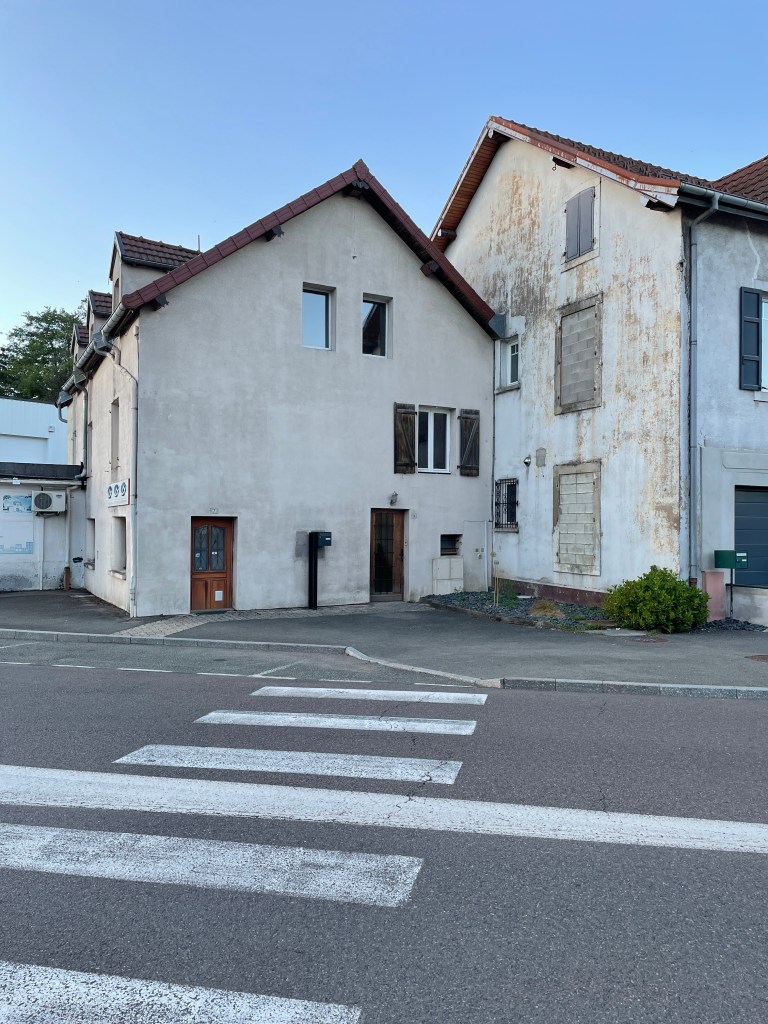
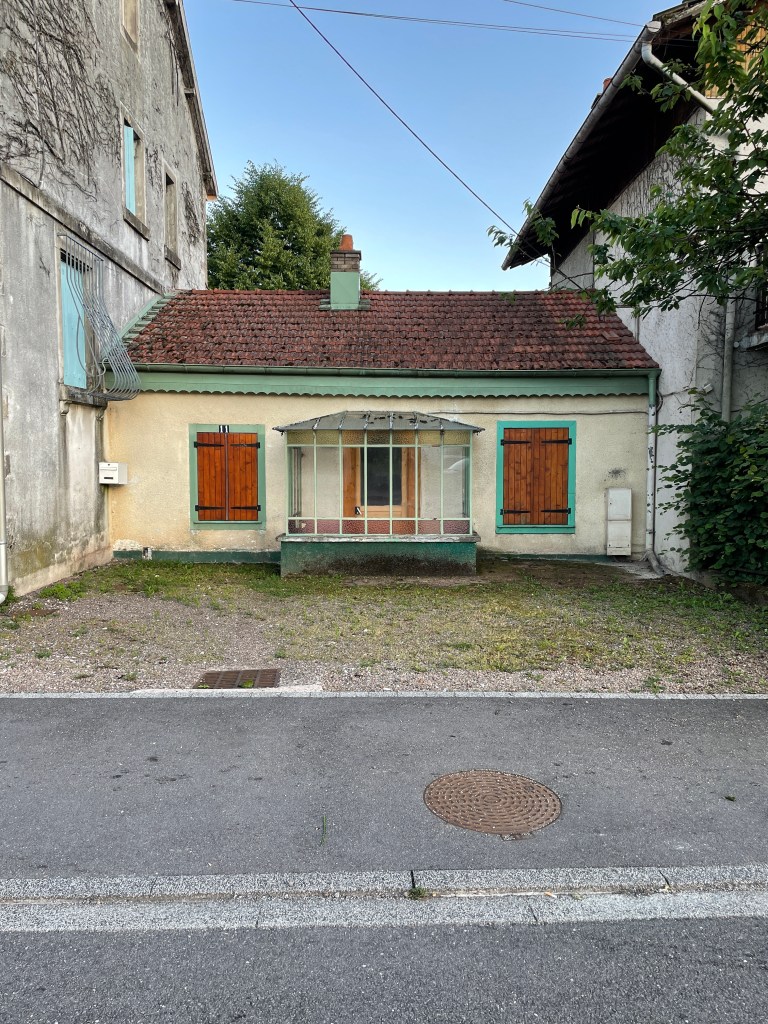
A very tiny town. Old buildings lining the road, most look empty. A small restaurant called Restaurant Cook. The Tourism Office. Nobody out. And it was hot. Clear blue skies and bright sun. Old houses, overgrown yards with wildflowers and hydrangeas. Sidewalks of gravel.
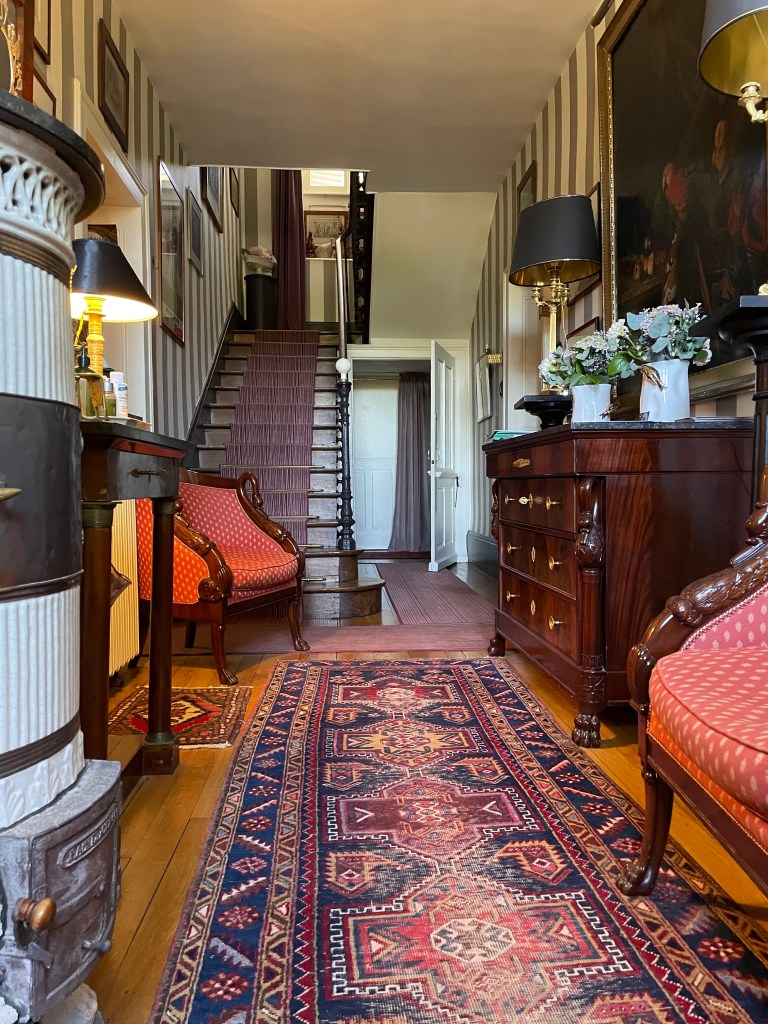
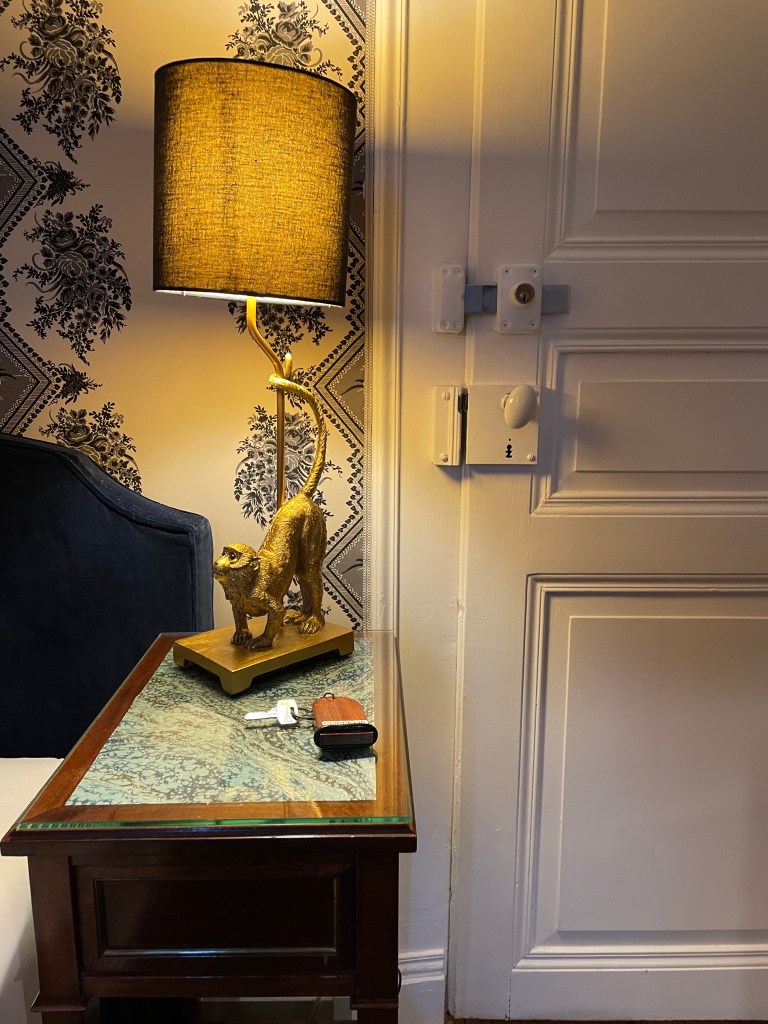
I chose a bed and breakfast that had the highest reviews online. I walk up and a nice French man named Emmanuel greets me at the gate. I walk in and everything is covered in antiques, floral patterns, upholstery. Oh god. He tells me Le Corbusier stayed here twice.
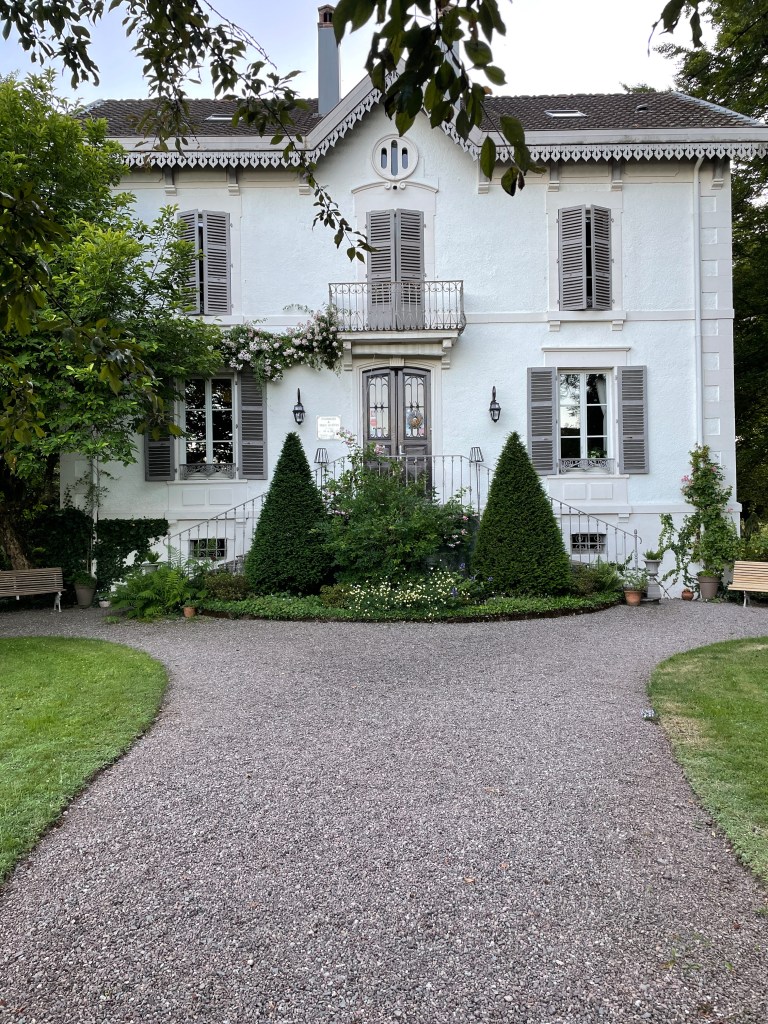
It’s about 2:30 pm and my check-in isn’t until 5:00, so I can drop my things and then come back later. He tells me I can leave my backpack. Um…Where? I’m terrified of knocking something over or breaking some heirloom. I drop it near the door. I briefly think about someone taking it, but they wouldn’t get far, if anywhere at all with it.
Emmanuel tells me I should change my shoes to my hiking shoes. There are rocks on the path, and closed-toed would be better for my feet. So here I am, sitting on a very ornate rug in this entryway, surrounded by breakables, digging in my bag for socks, and changing my shoes.
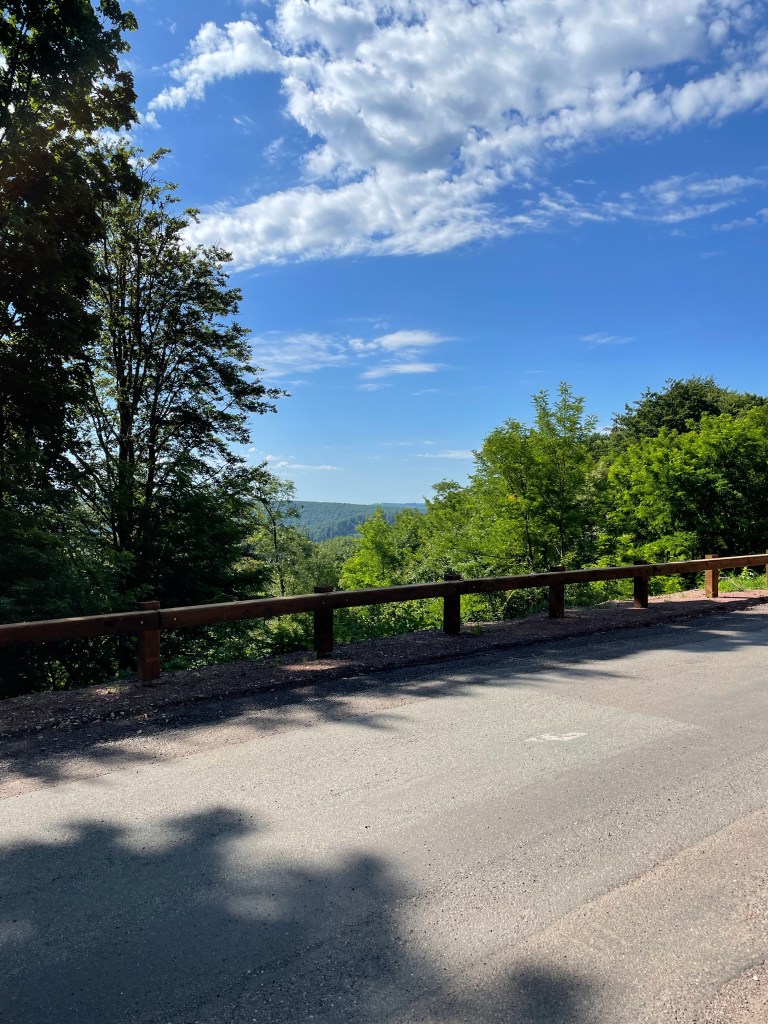
I head out. It’s on the side of a mountain, literally. Emmanuel tells me to turn at the Tourist Office, walk up the road for cars until I get to a gravel path on the side through the trees and take that. Excellent.
It’s a steep climb. I’m so sweaty. And I haven’t eaten since 9:00am at the hotel in Basel. And Restaurant Cook was closed when I came through. I come to the gravel path. It’s steeper. I just look down at each step I’m taking. Focus on each step.
There are several cyclists trying to pedal up this incline. In this moment, I’m glad I’m on foot. At some point the gravel path ends at the street, and picks up again across the street. So I cross and continue down the gravel until it turns to dirt. And then just a suggestion of a path.
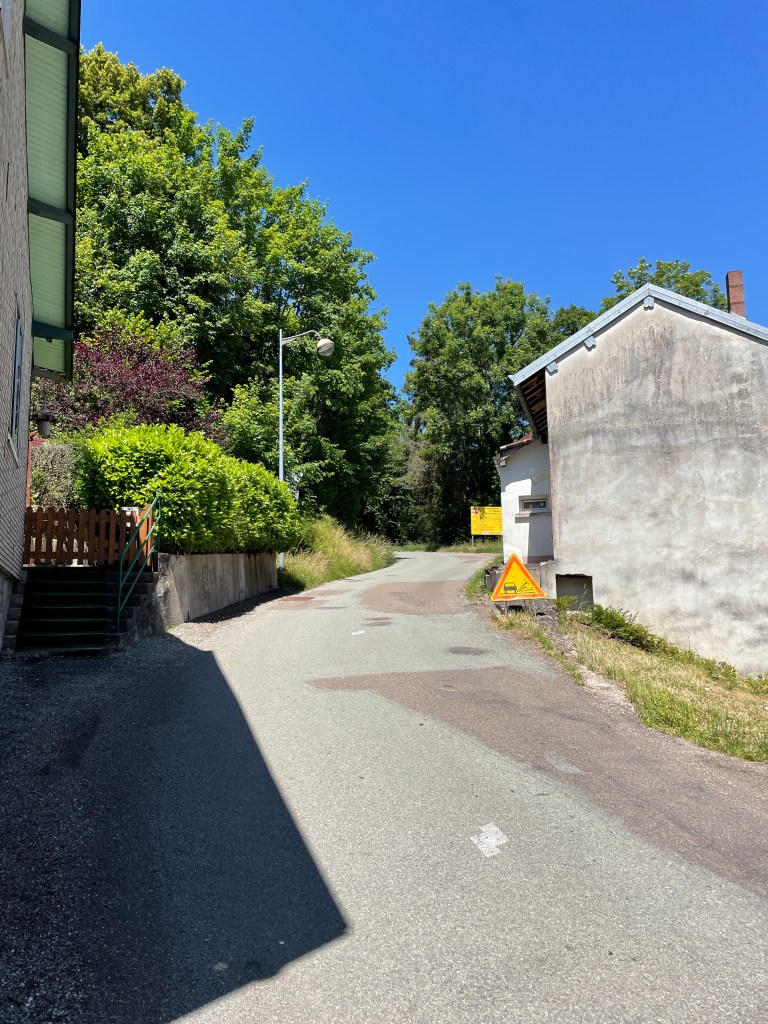
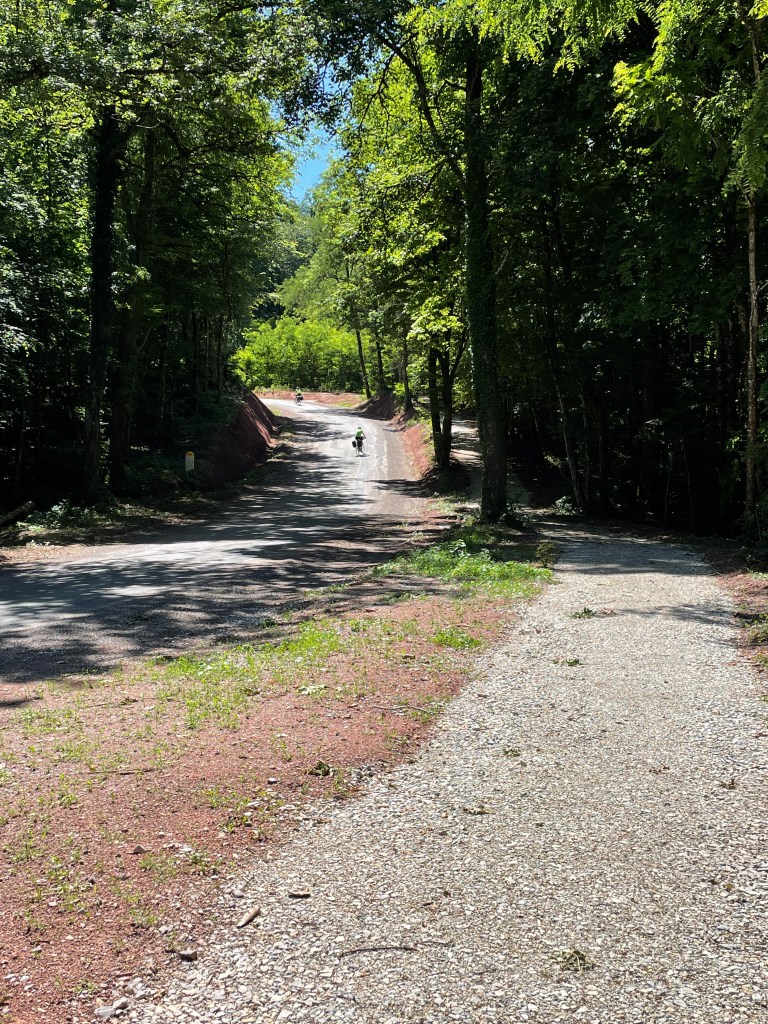
It winds downhill in the opposite direction of the street to the chapel. I walk a ways until I realize this can’t be the path. I decide to turn around before I get lost, and subsequently murdered, in the French countryside. Back up the hill this time.
I finally make it to the road and then up again to the Chapel.
At the entrance, a welcome area and gift shop designed by Renzo Piano. It’s nice, though I imagine the view of the chapel on the hill would be significantly more beautiful.
I pass through and walk again up the hill. My body feels electrified. I can’t actually believe I’m here.
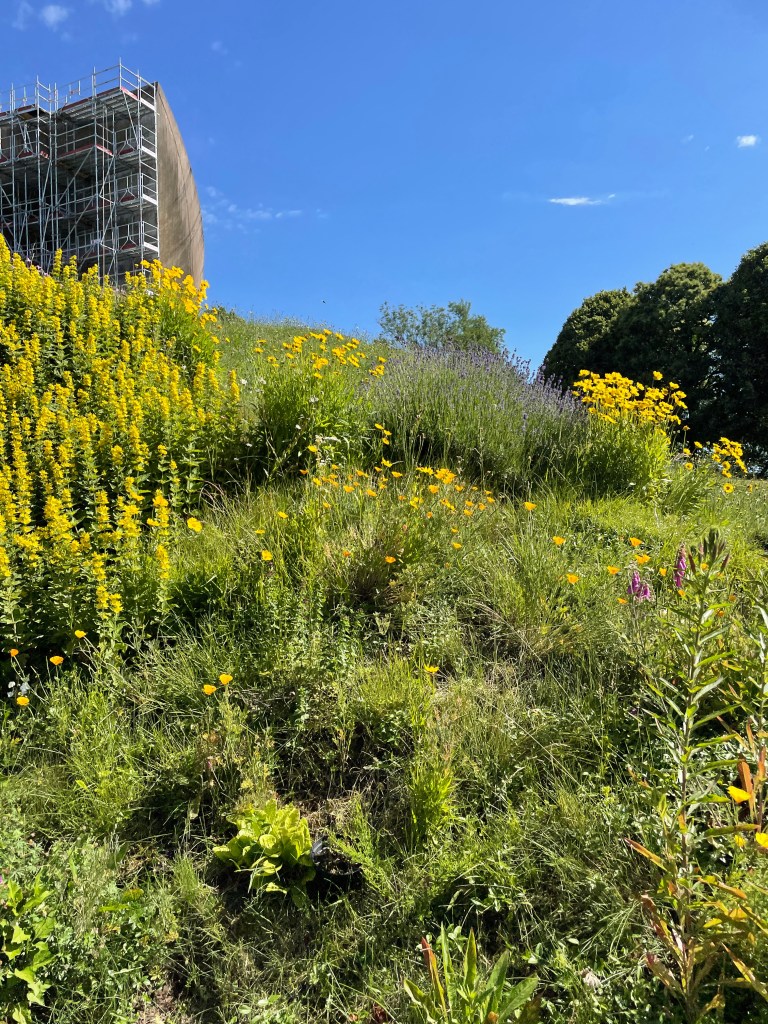
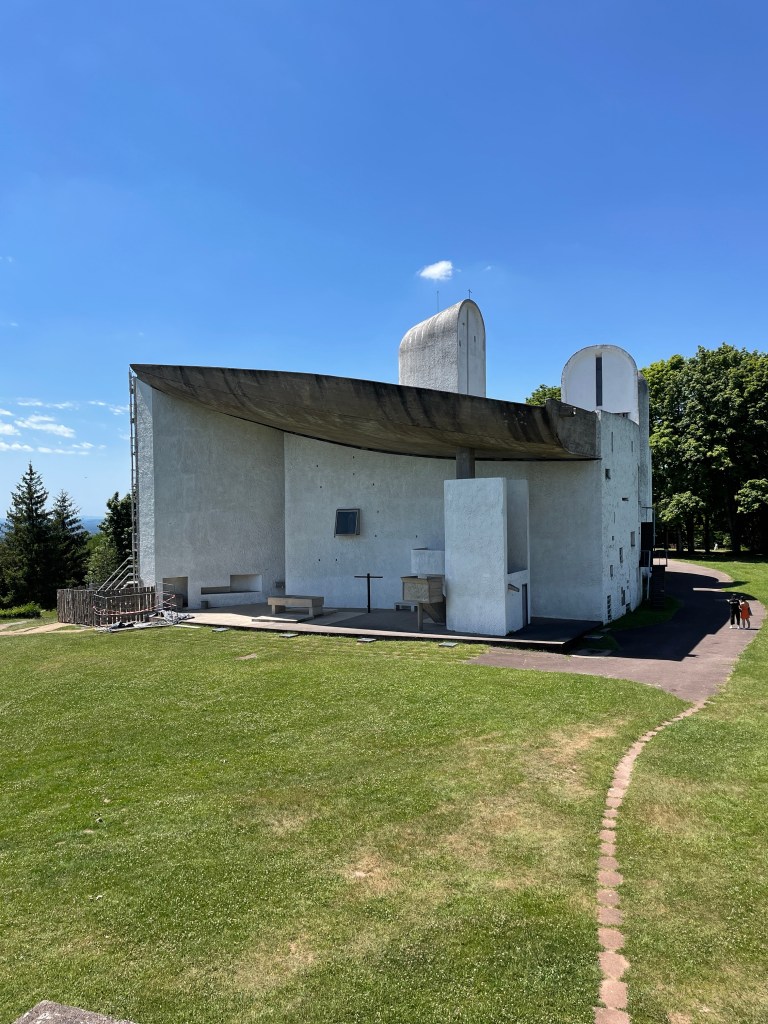
The southern facade is covered in scaffolding. Damn. The best part and first view slightly ruined by restoration. Very necessary, but totally harshing my vibe.
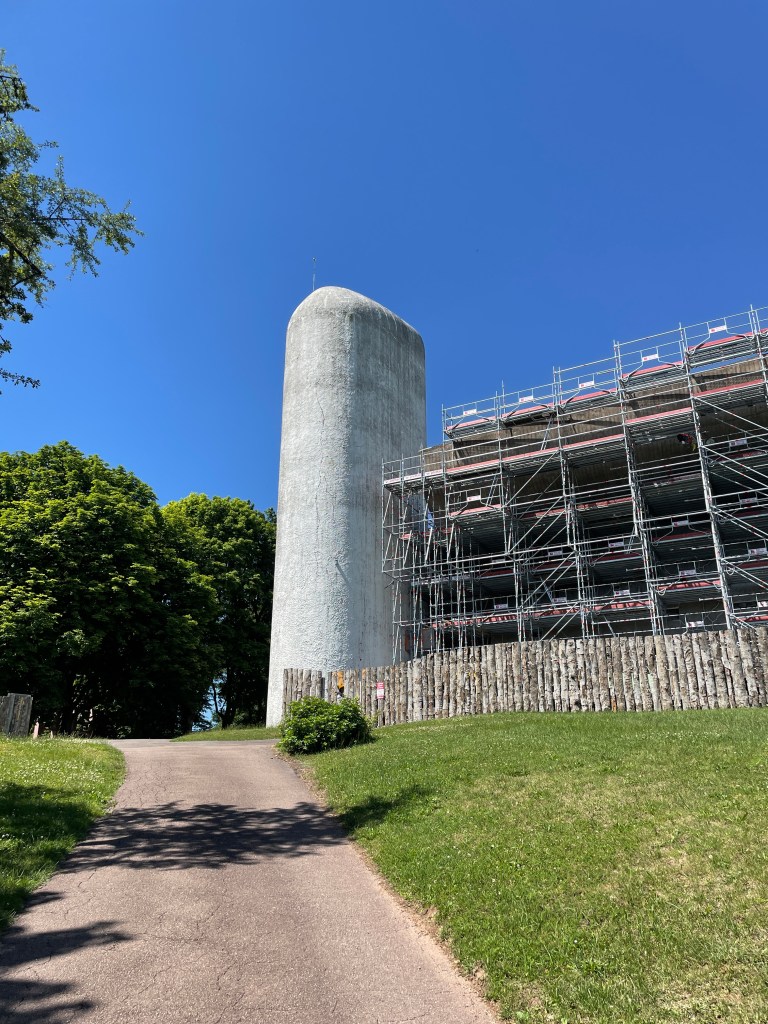
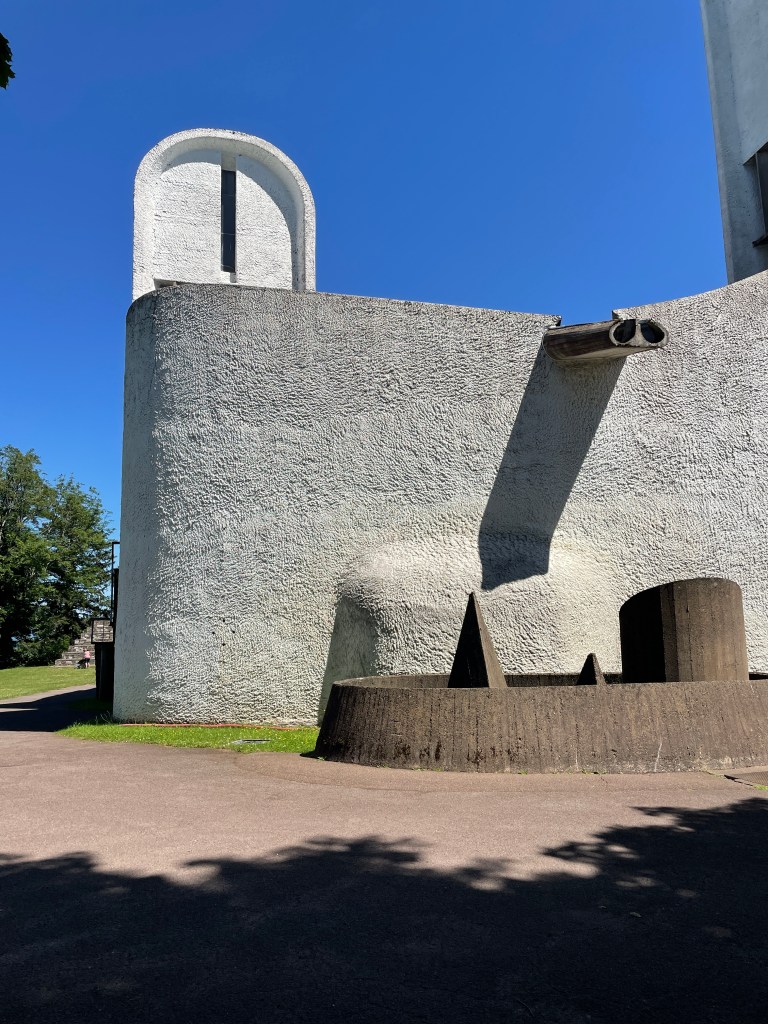
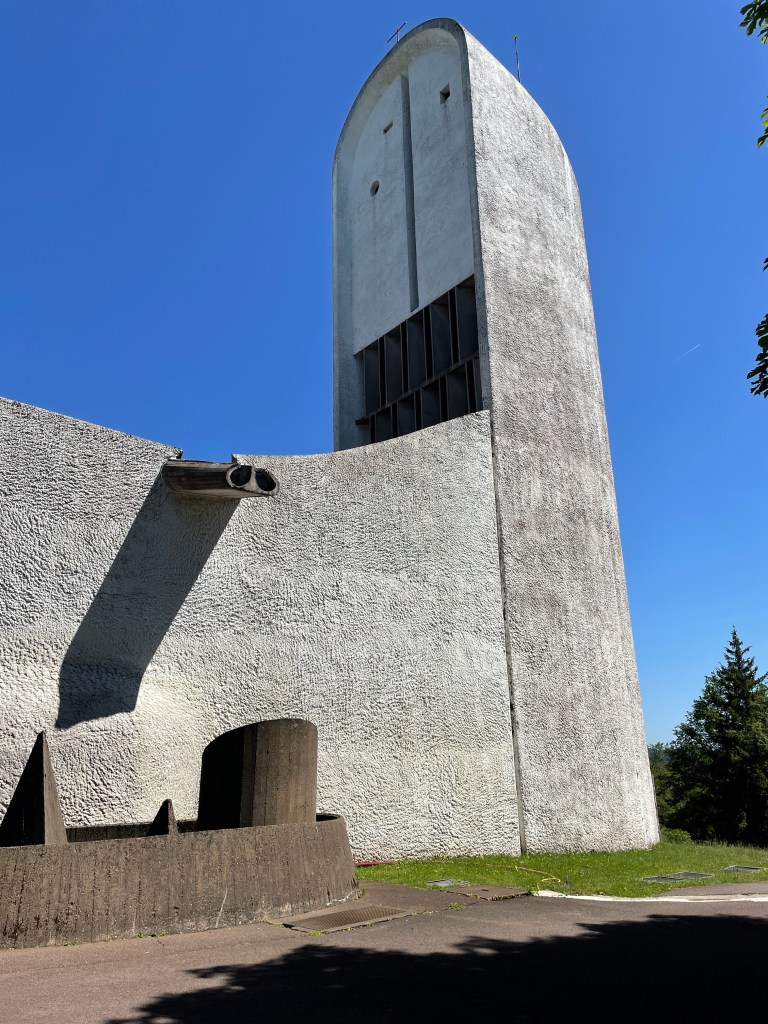
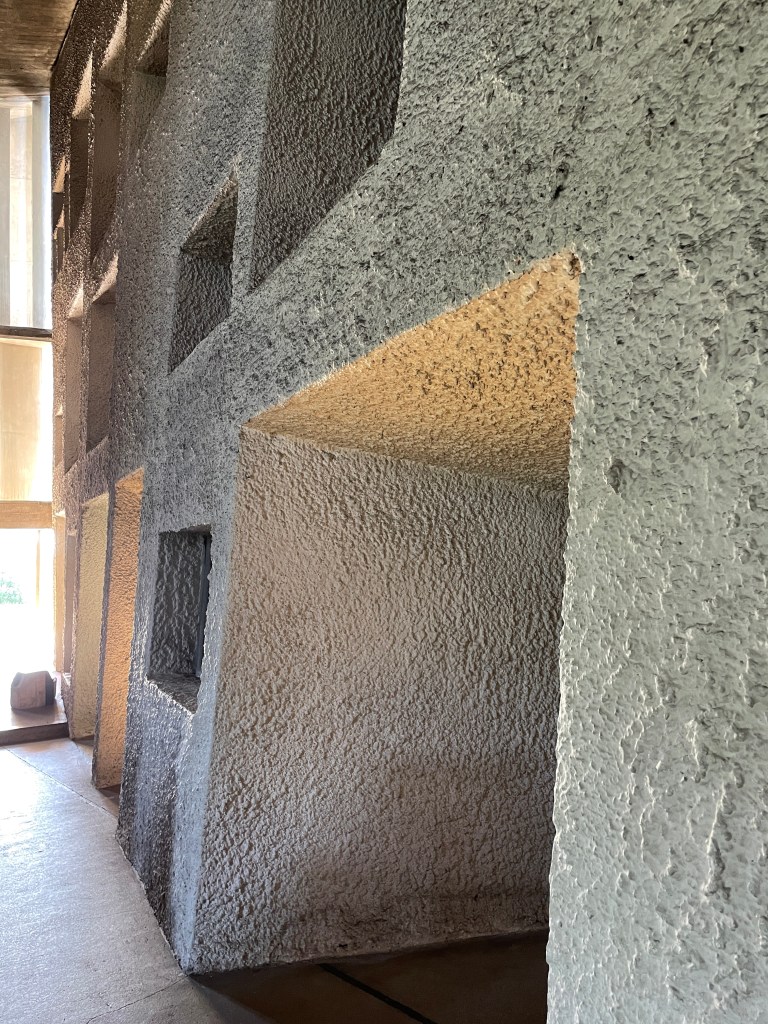
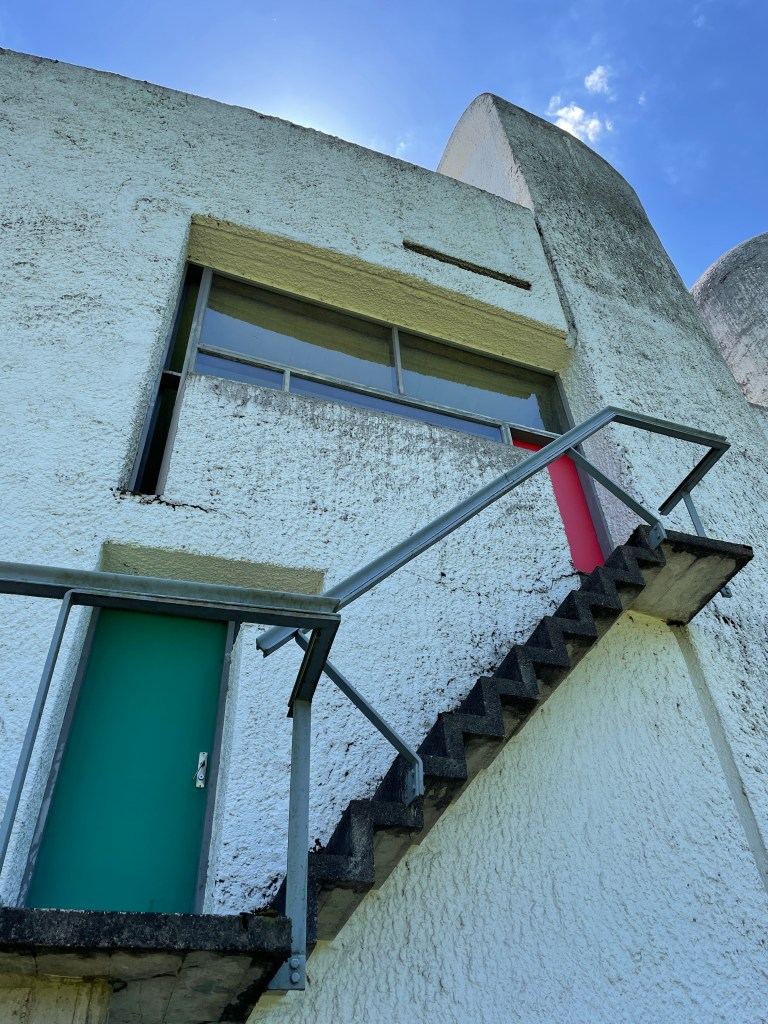
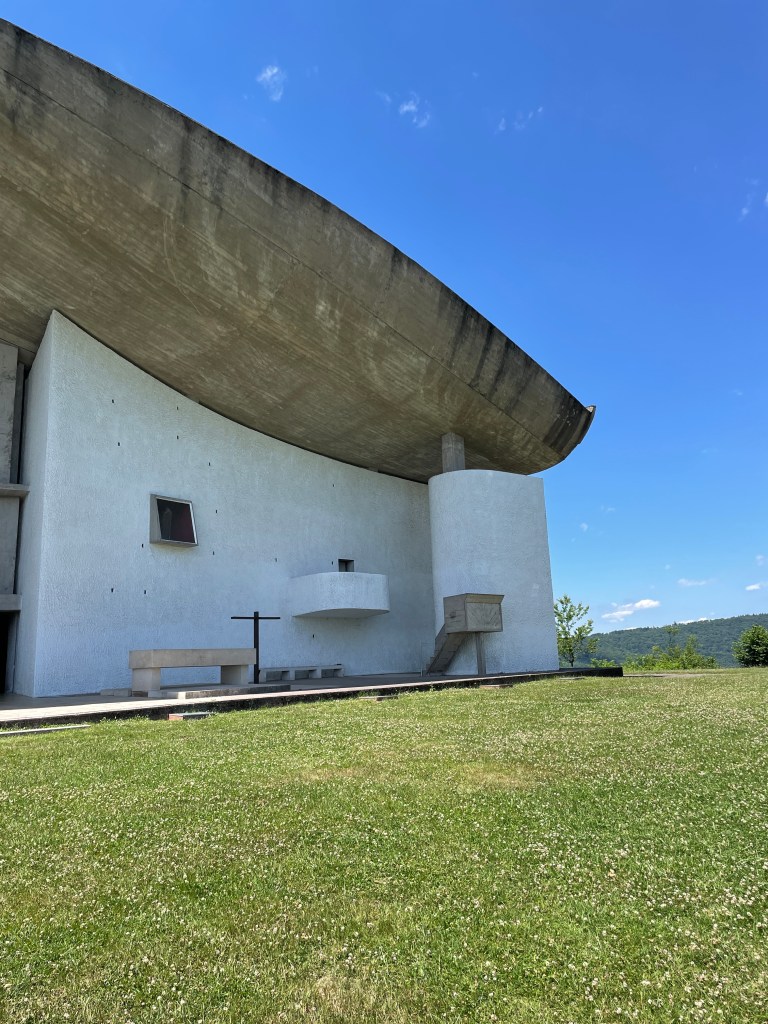
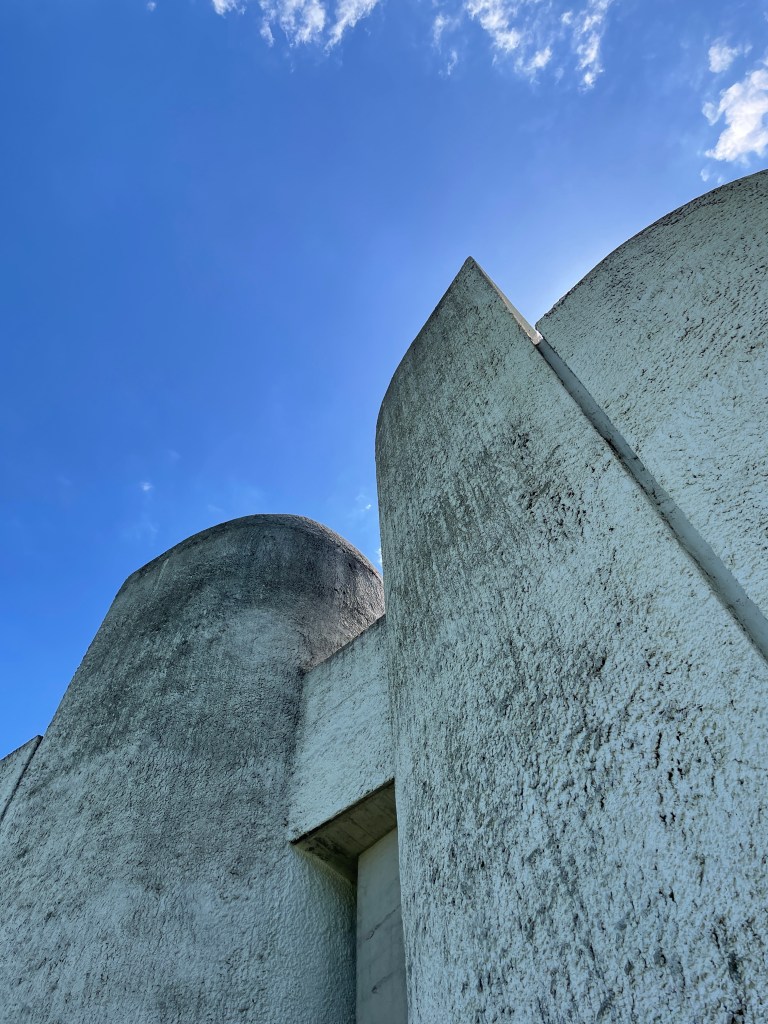
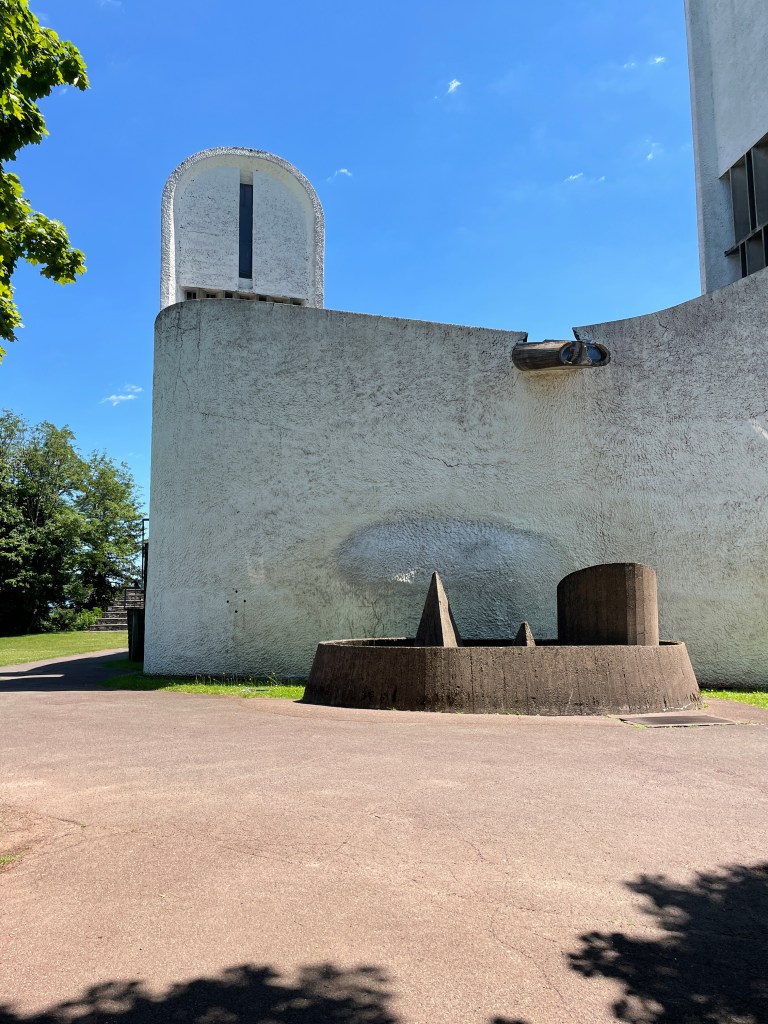
I walk around to the side. The huge sculptural concrete roof plane overhead. The rough, white concrete walls. A mass. A weight.
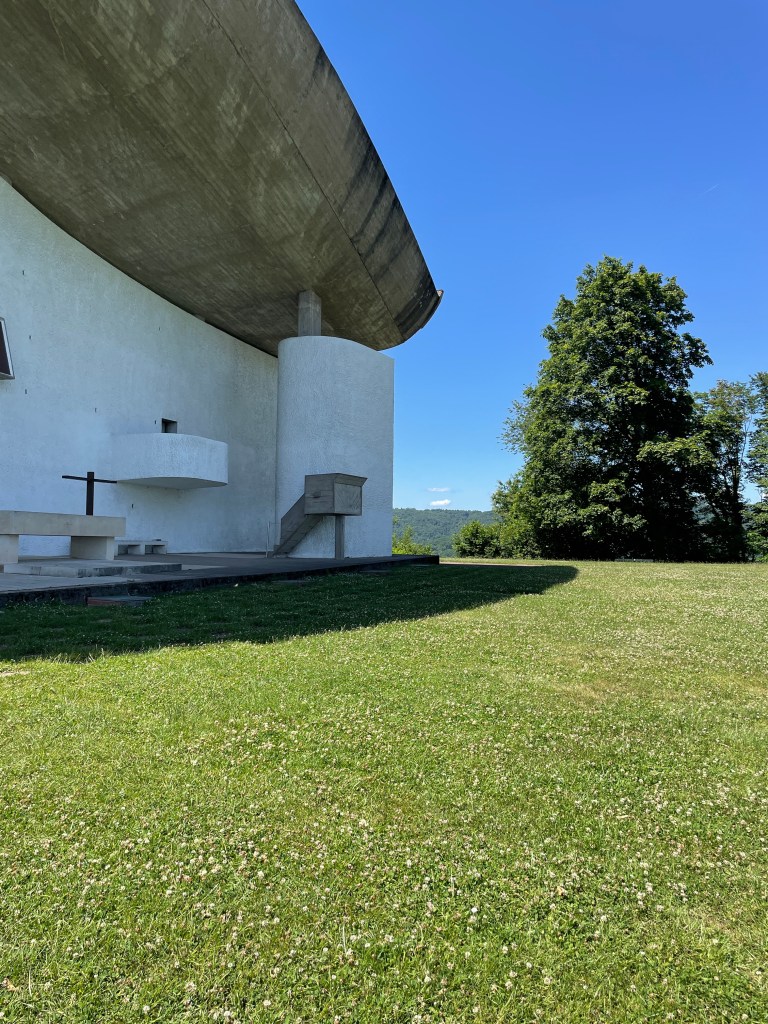
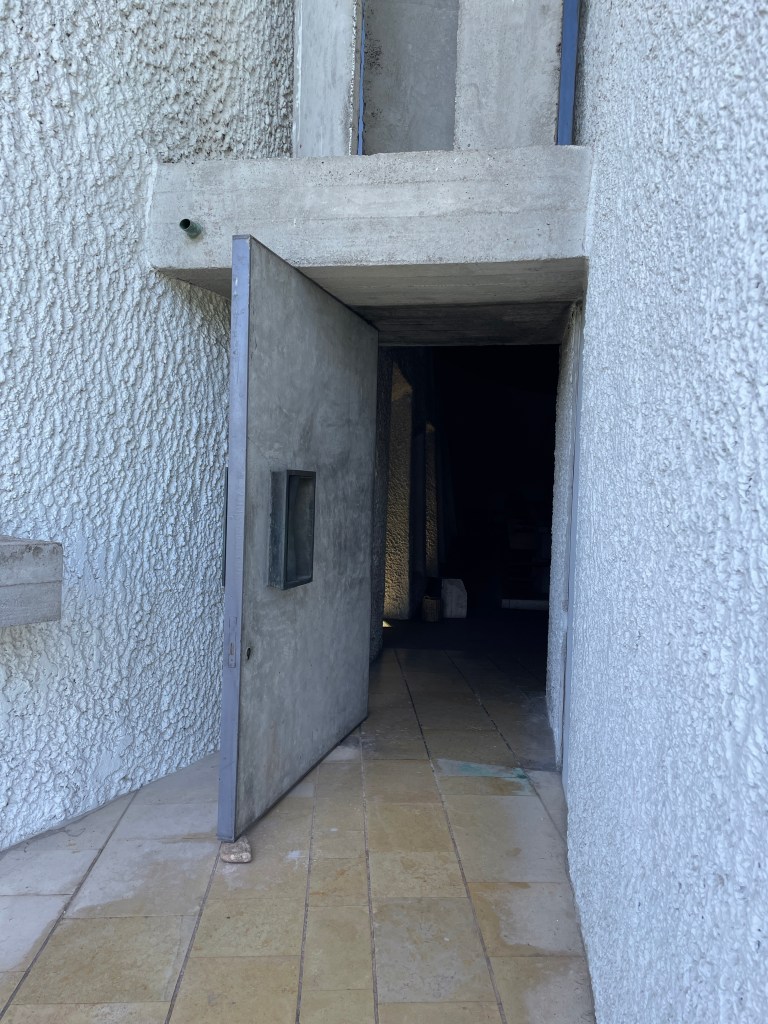
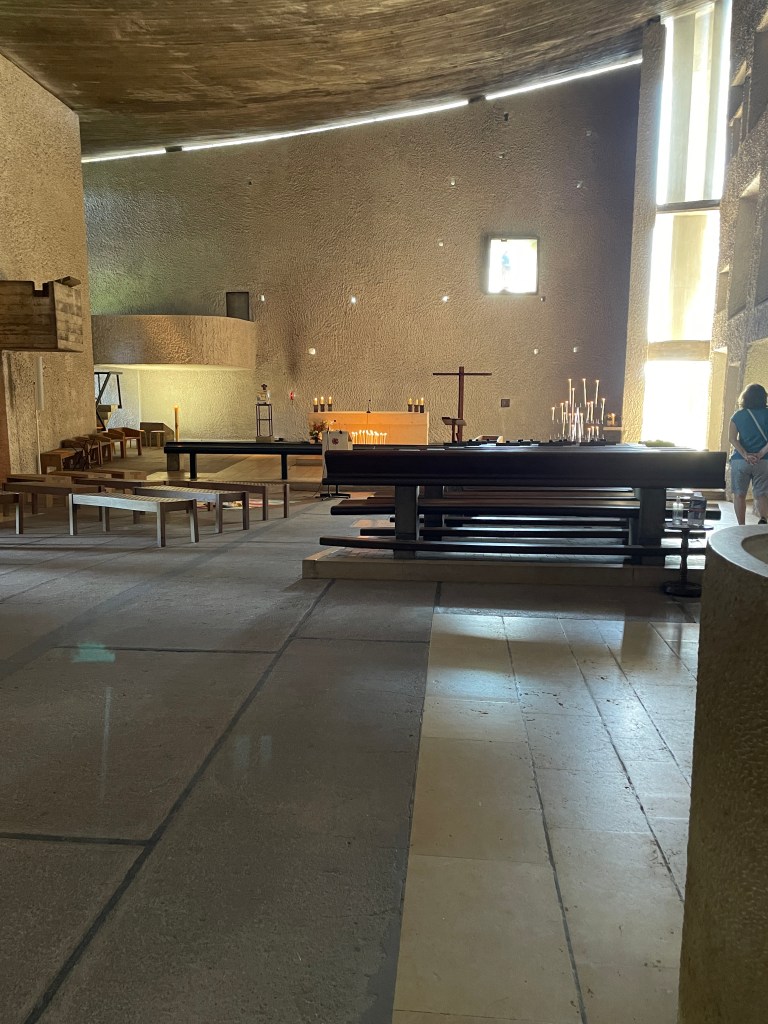
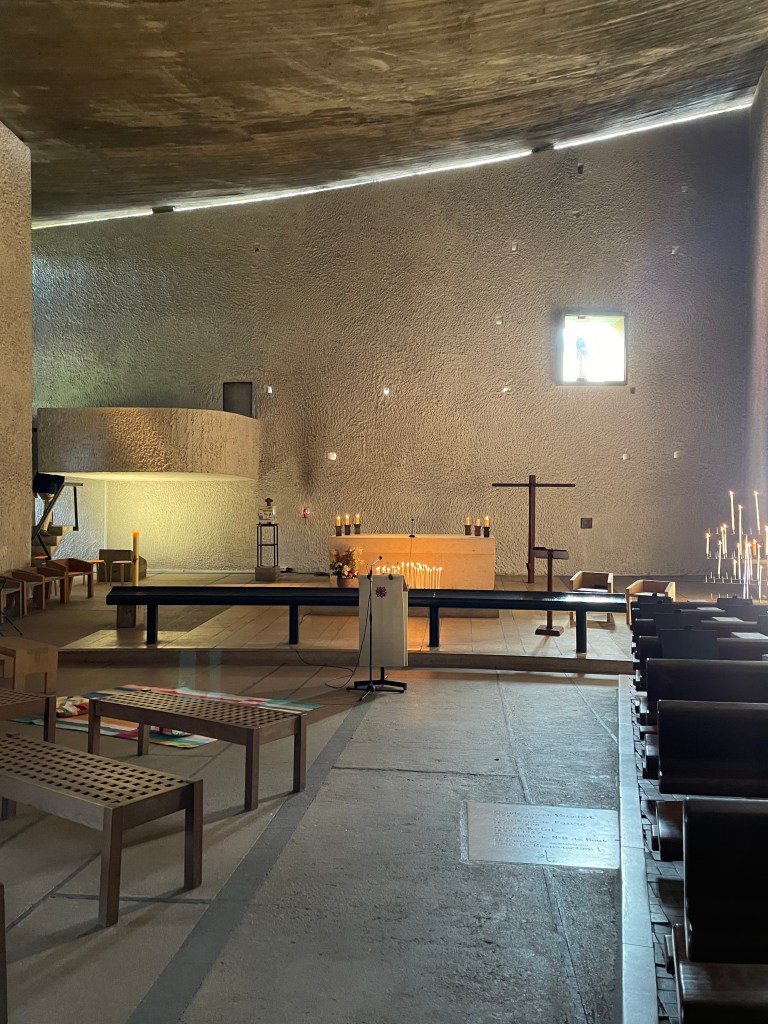
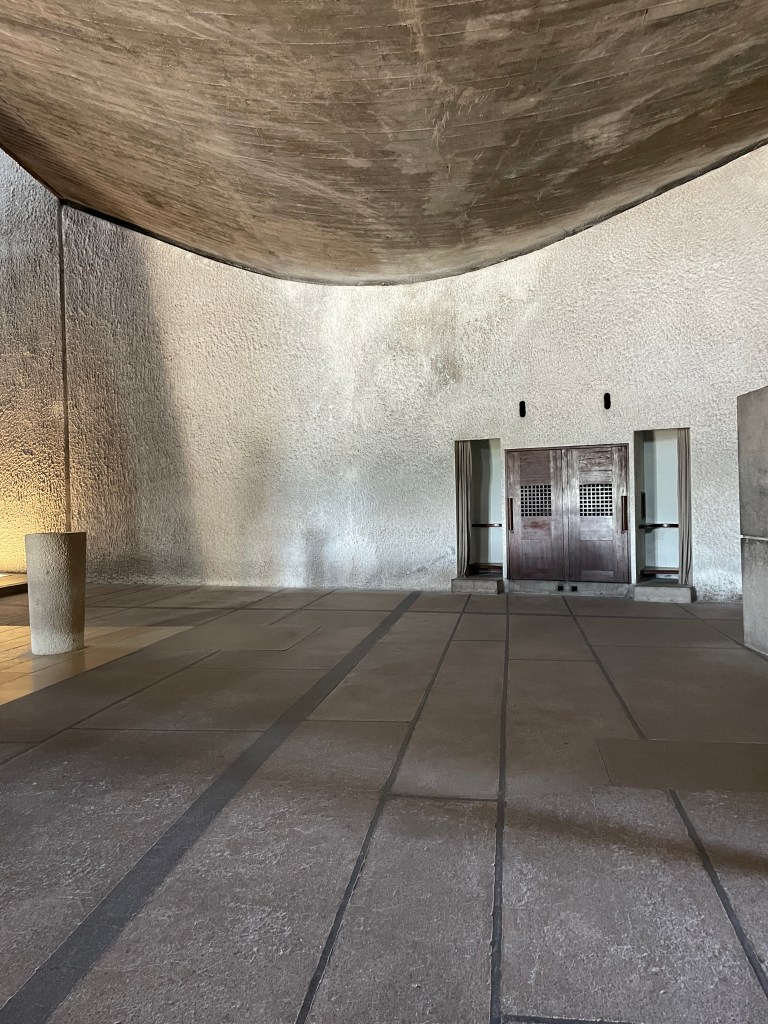
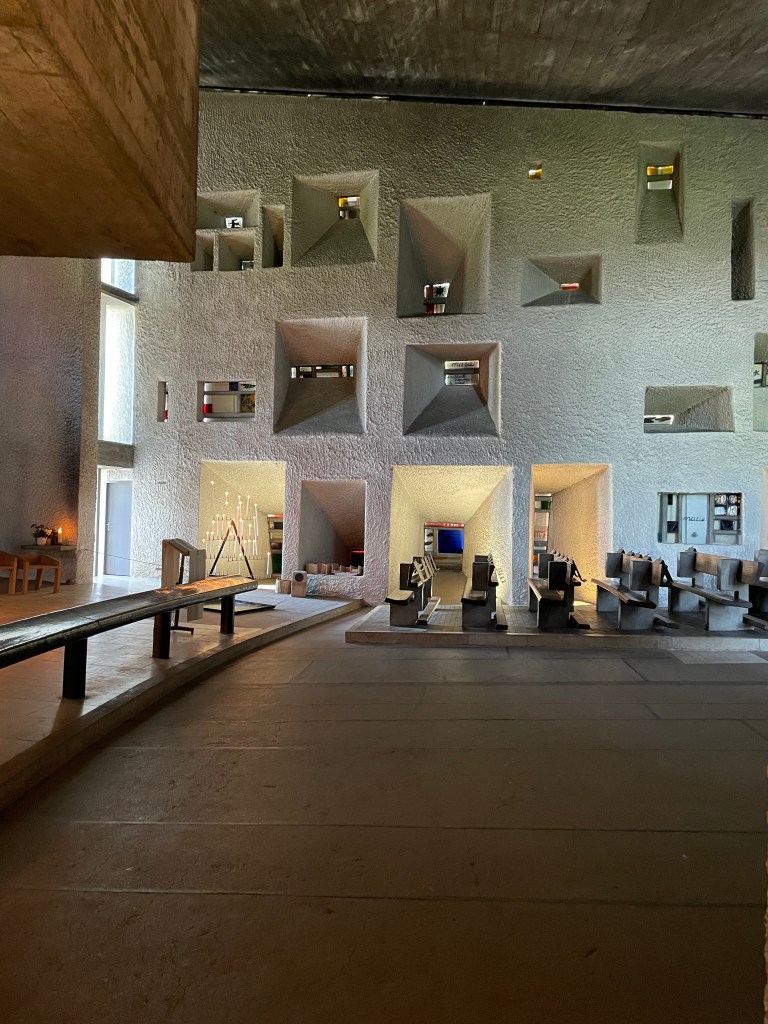
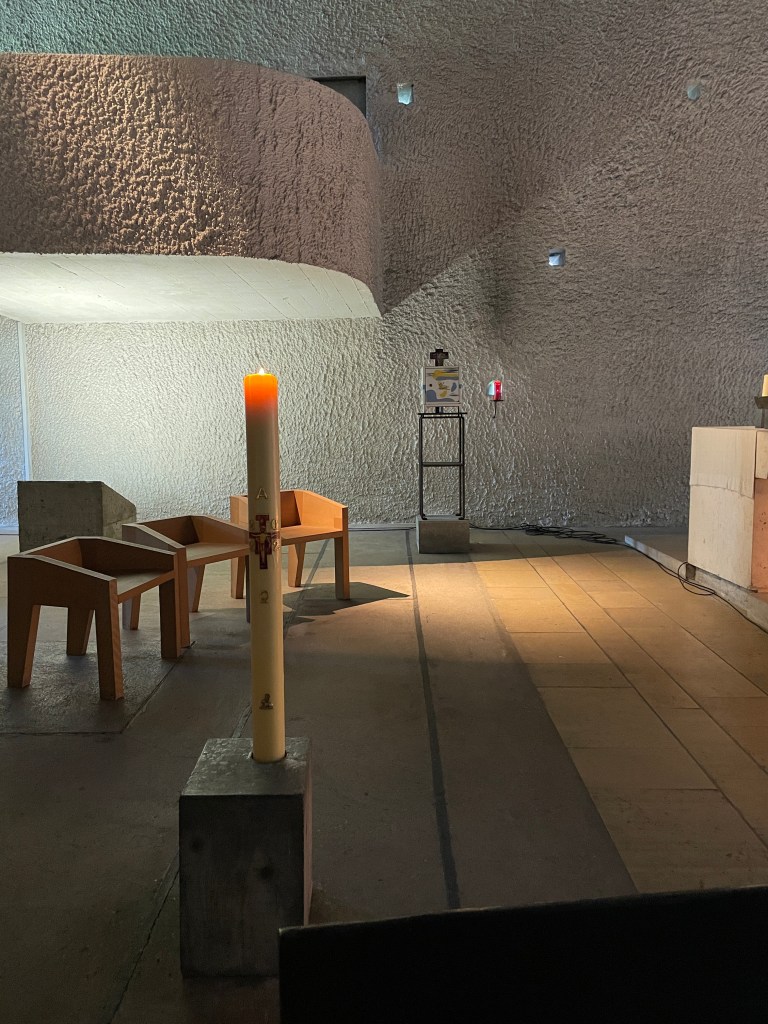
I walk through the mass of the wall and the space takes my breath away. There are no words or photos to describe it. It’s quiet and dark. A cave. A tomb. But with moments of light. Apertures like stars. As if the tectonic plates of the earth collided and then lifted and the sun pierced the planes at specific moments. Moments that remind you that perhaps you are connected to something larger than yourself.
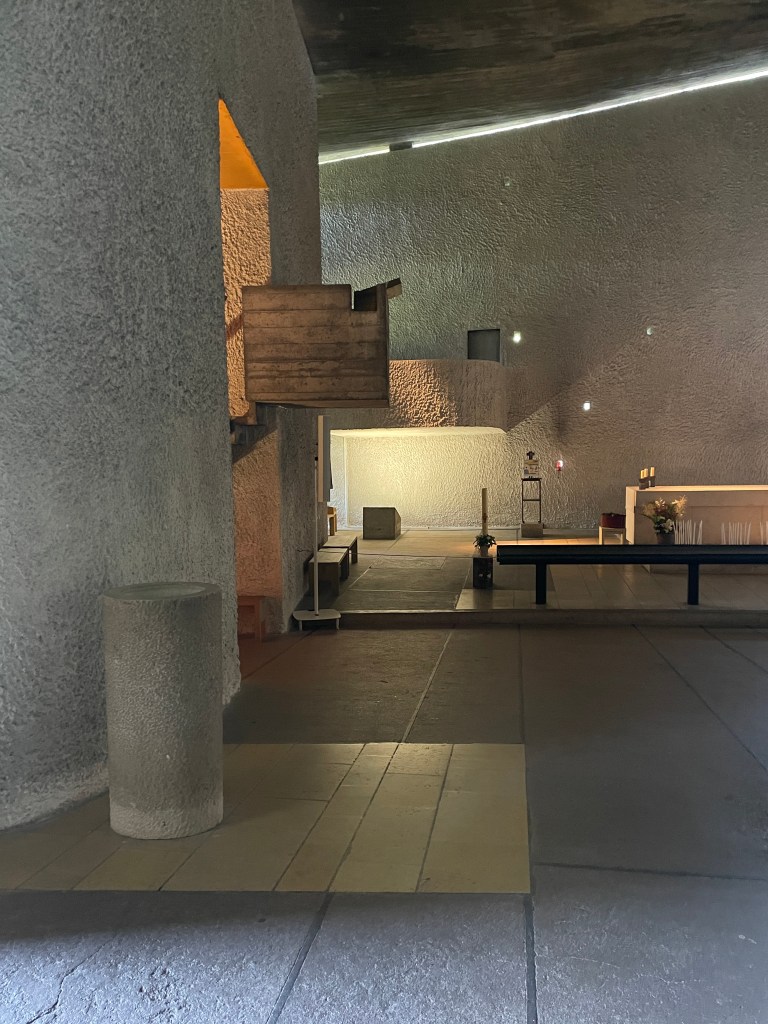
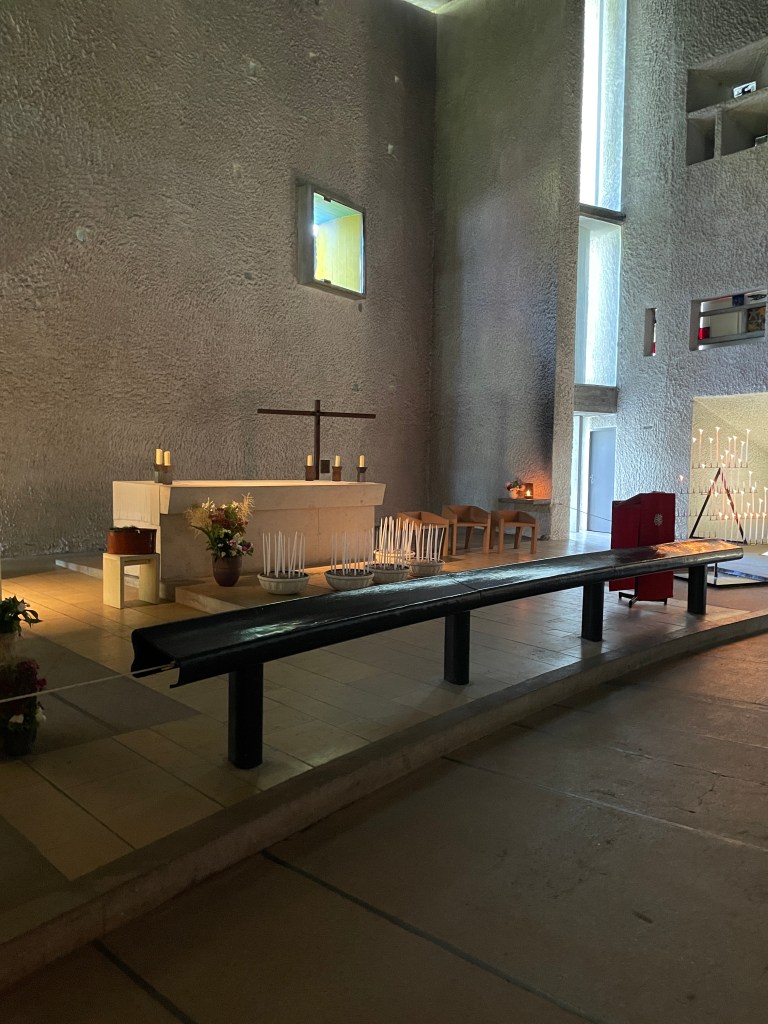

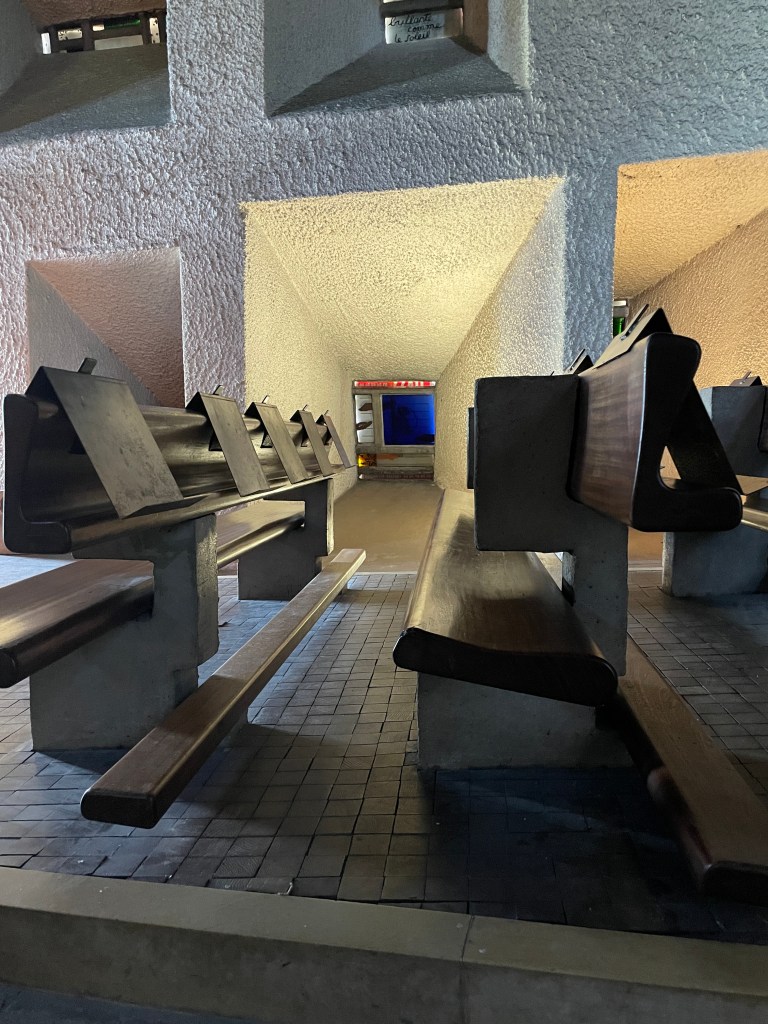
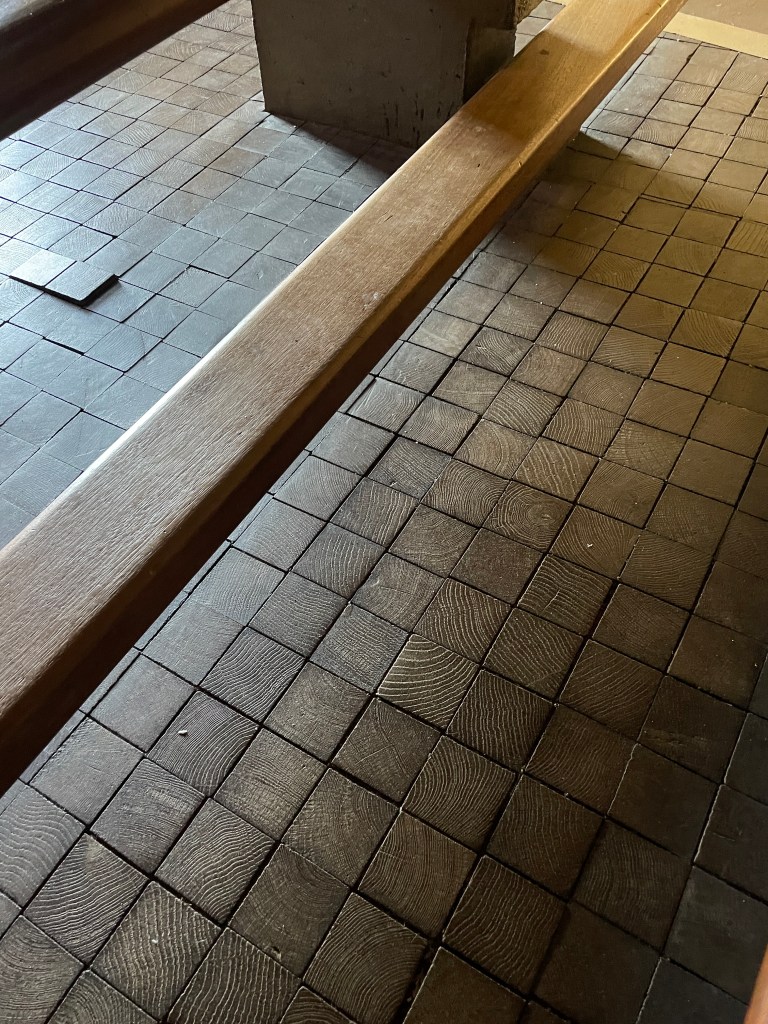
The building feels massive from the outside, but inside it feels much smaller. Intimate. Human. Quiet. Soft. And almost primitive. And obviously modern at the same time.
A few people are inside. One of the cyclists I saw pedalling for dear life up the hill stands in the middle of the chapel and begins reciting a prayer. His deep voice reverberates throughout.
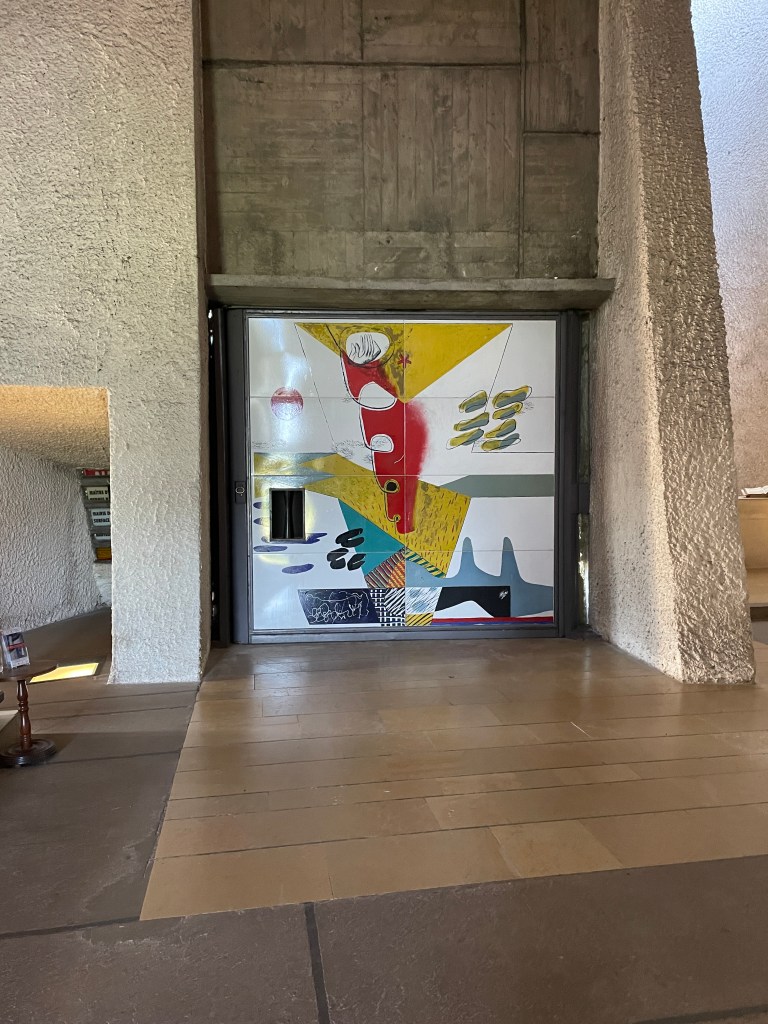
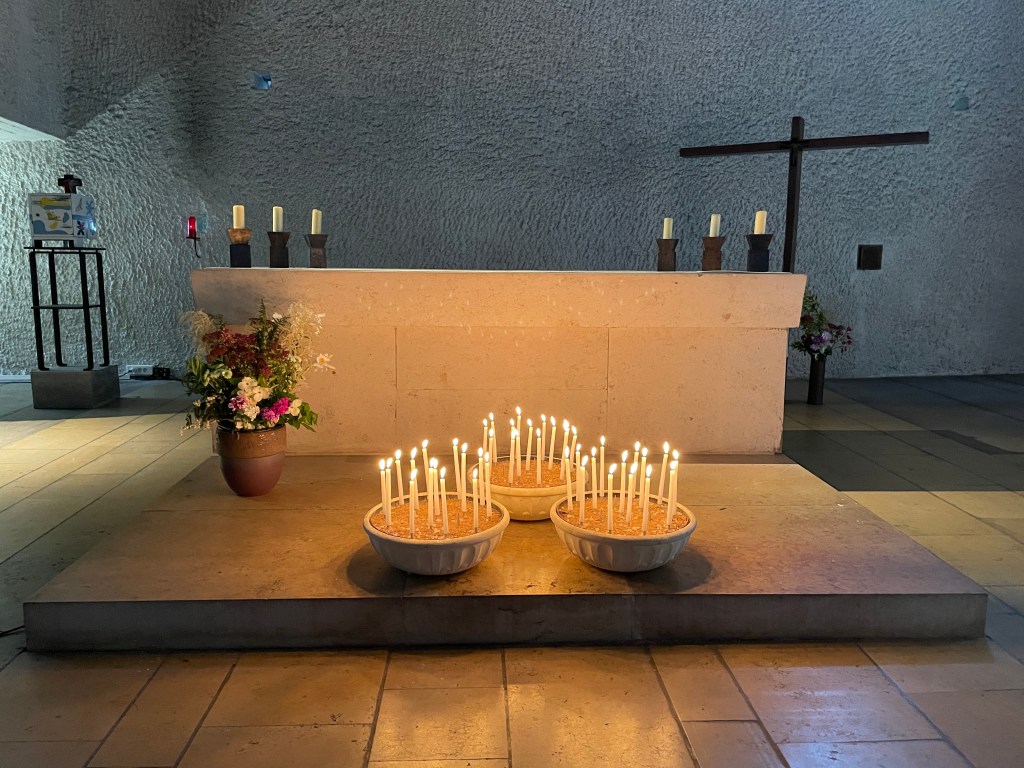
I sit on the pews for a while. Le Corbusier designed everything–the building, the door, the stained glass, the furniture, the candle holders, the pews. Everything. And it sings.
I make my way outside and wander around the grounds for a bit until I make my way back down the hill.

I am so hot, and tired, and hungry, and thirsty. The only thing open is a bakery. I grab a pastry and a water and make my way back. It’s finally 5:00. Emmanuel shows me to my room and I fall asleep almost immediately.
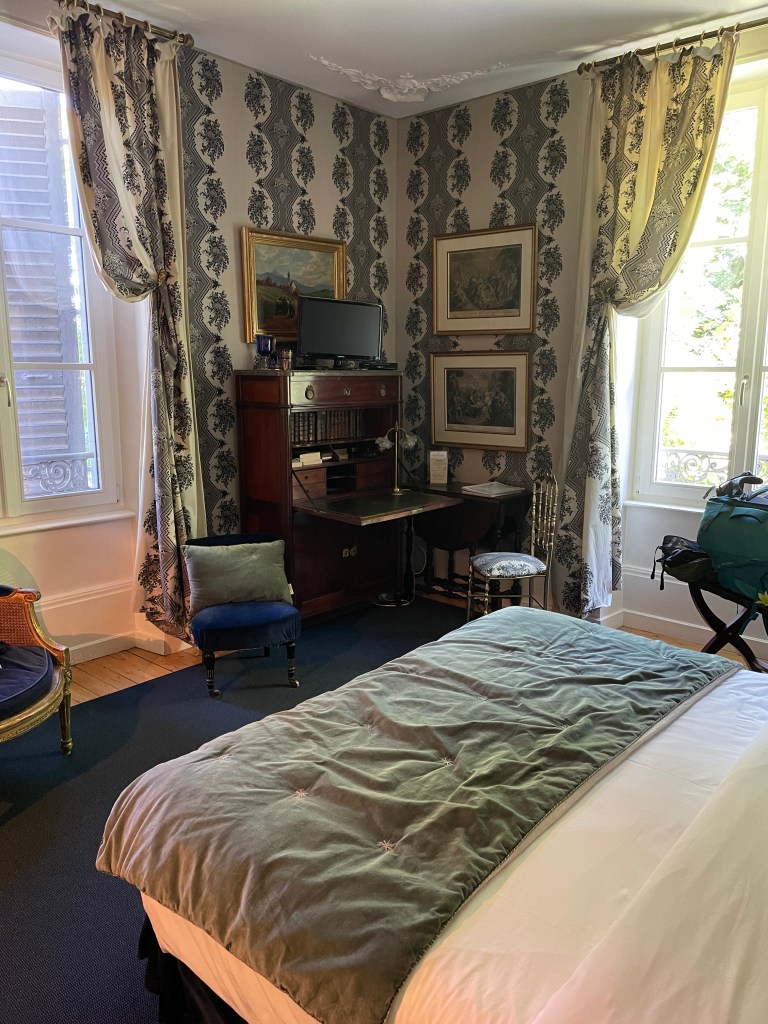
When I wake up I walk downstairs. Every inch of this BnB creaks, seemingly even when I just breathe. There is no way for me to move quietly, so Emmanuel hears me coming. He suggests a brewery for dinner, fun, casual. But there is a music festival in town and so it might be crowded. Great. I will have to wait even longer to eat.
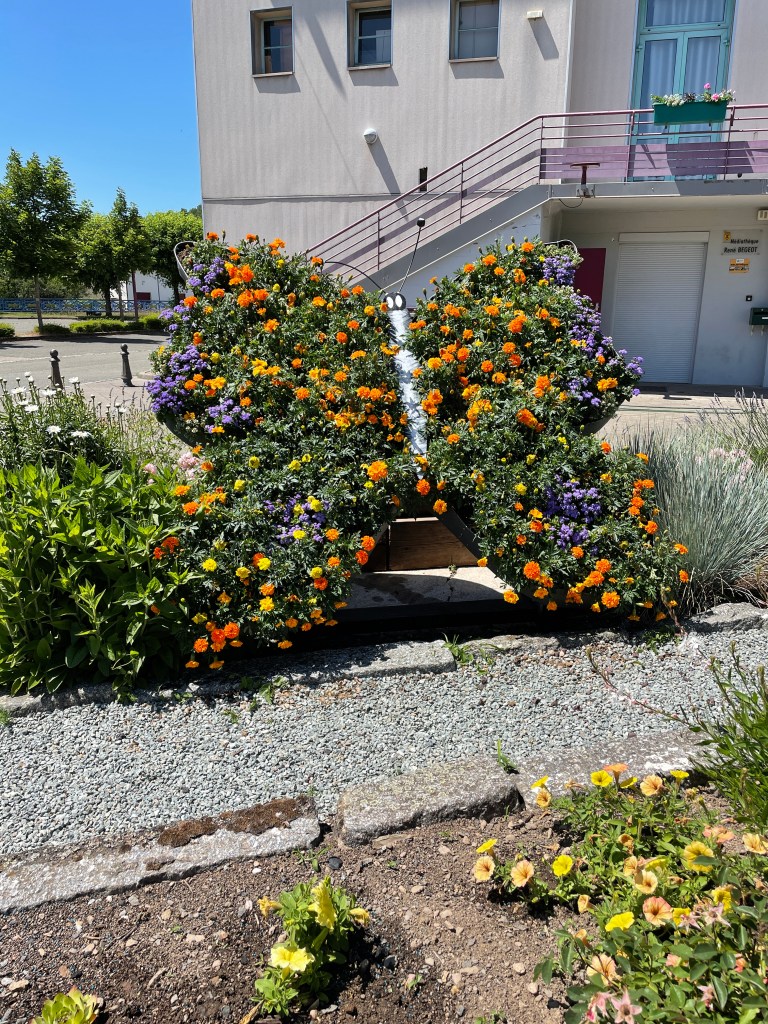
I make my way to the brewery. The town is beautiful. The flowers are beautiful. It’s really incredible.
When I get to the brewery, it is not crowded. And there are maybe two hundred people at this music festival. What on earth.


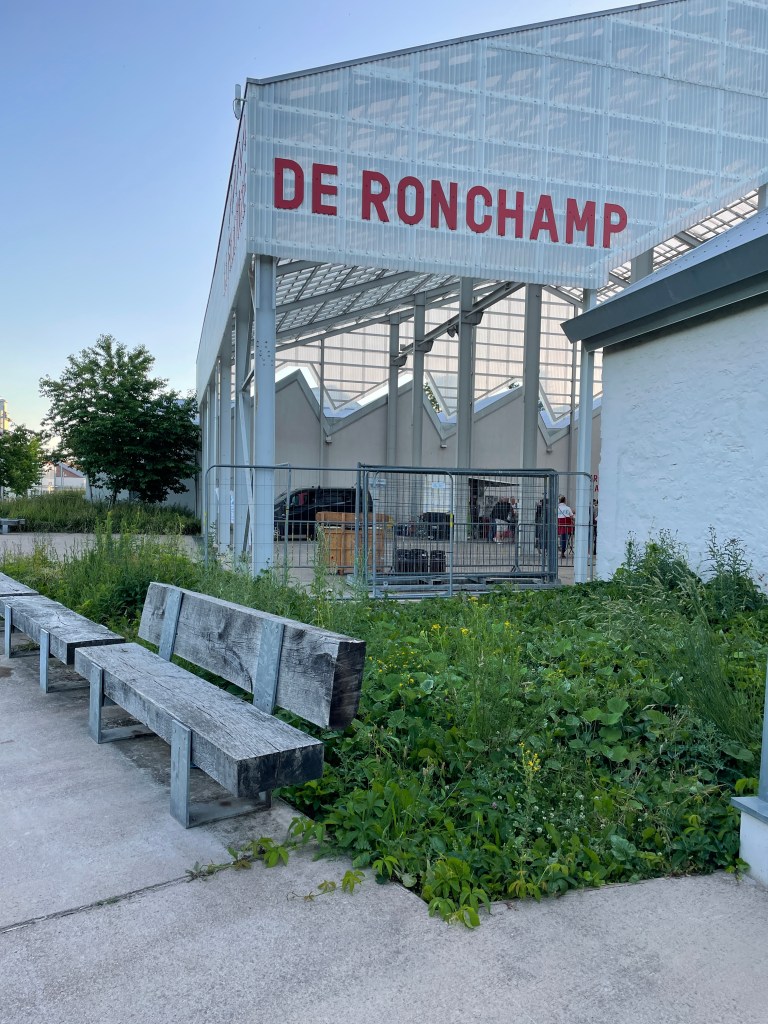
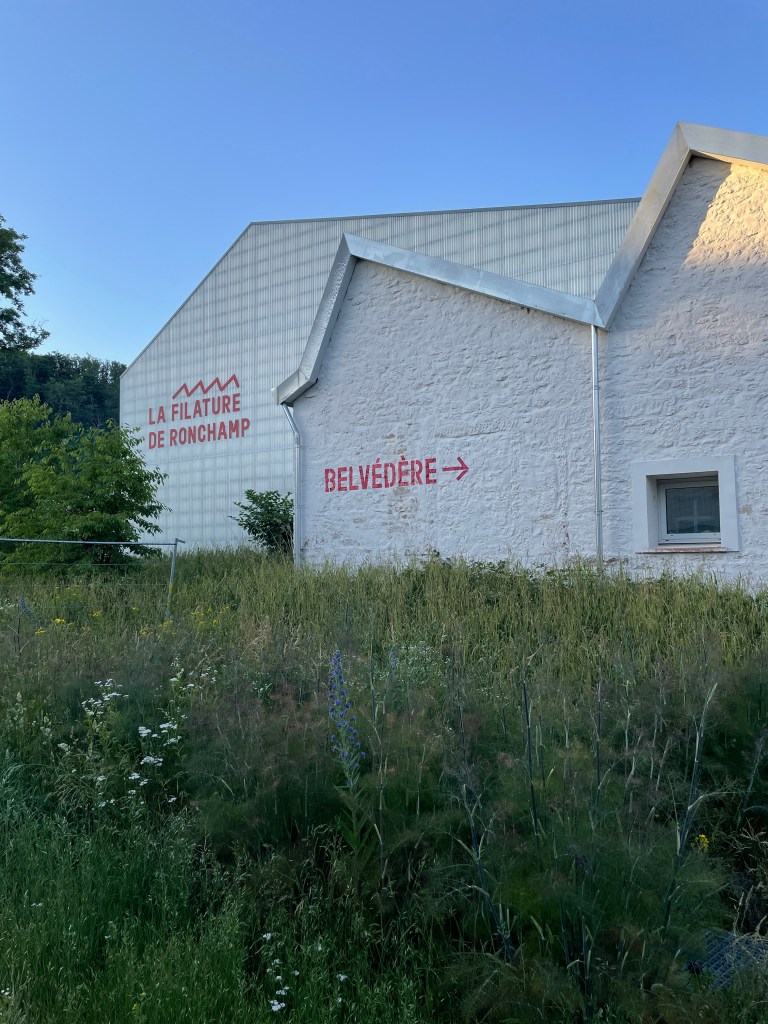
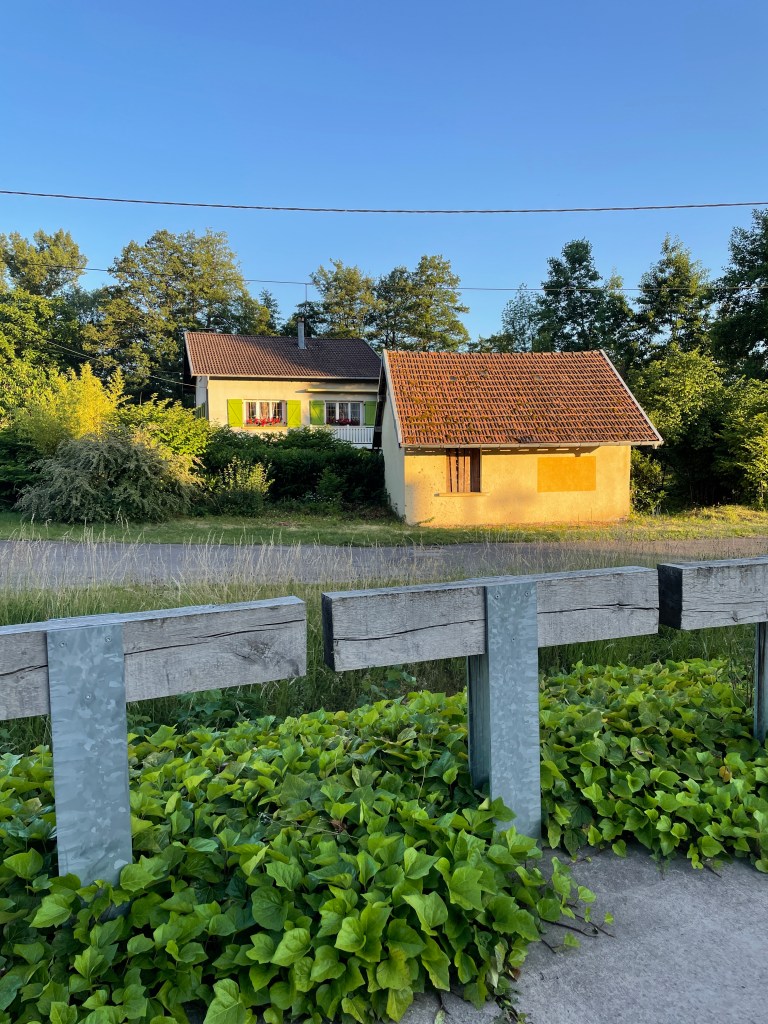
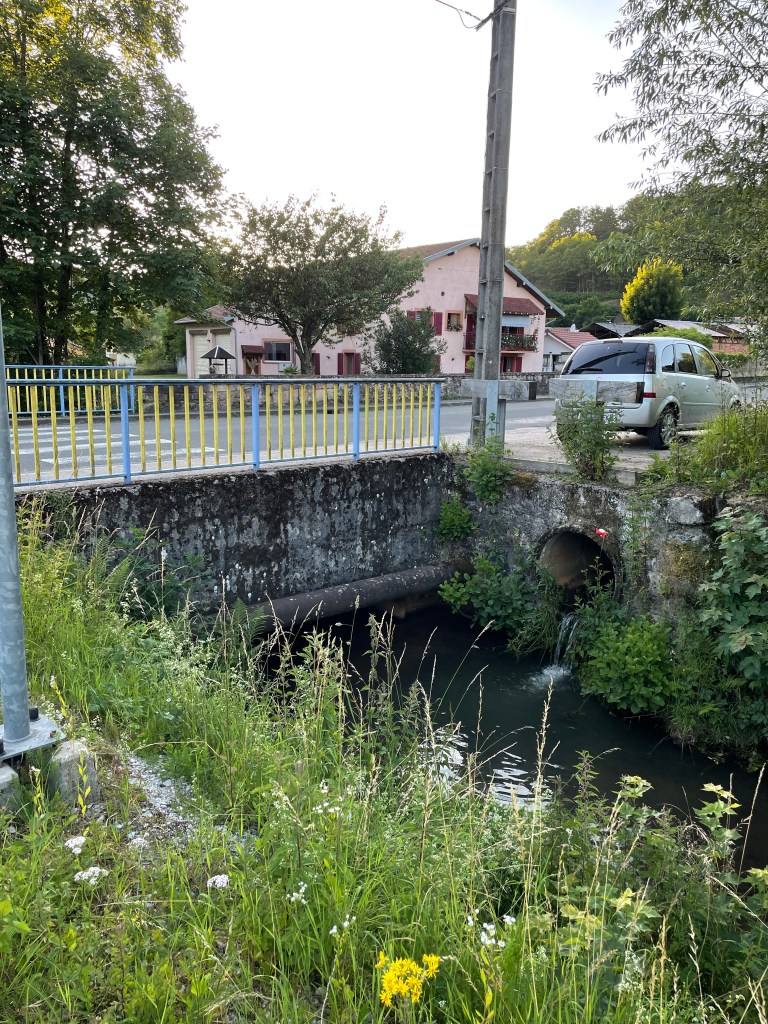
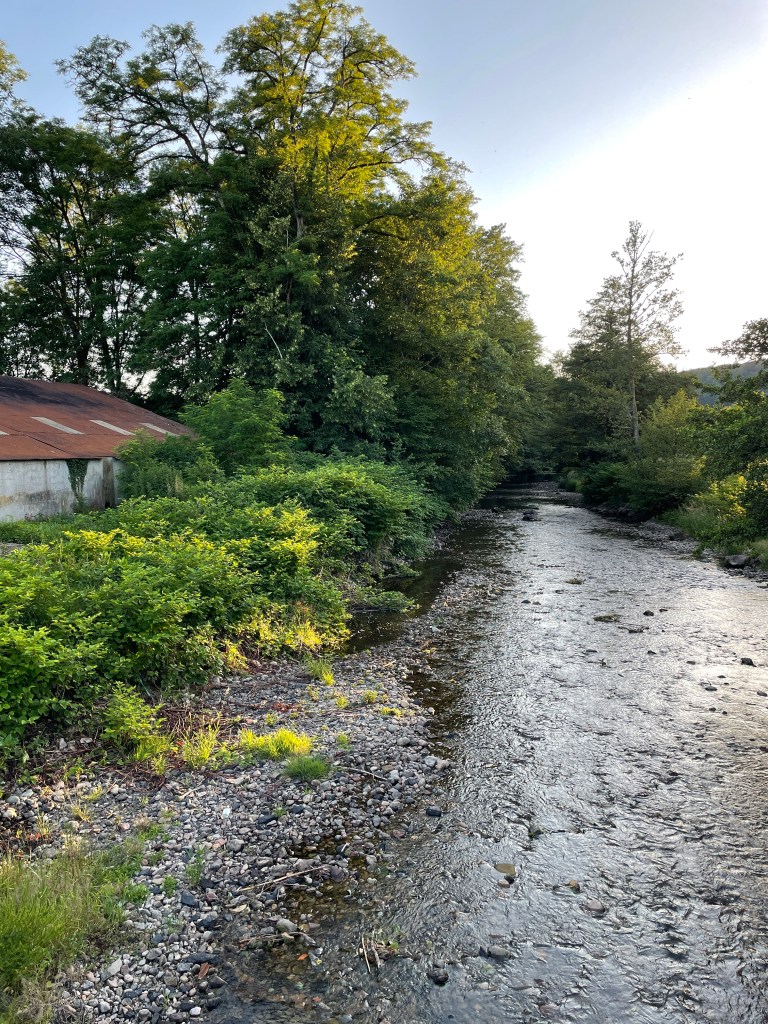
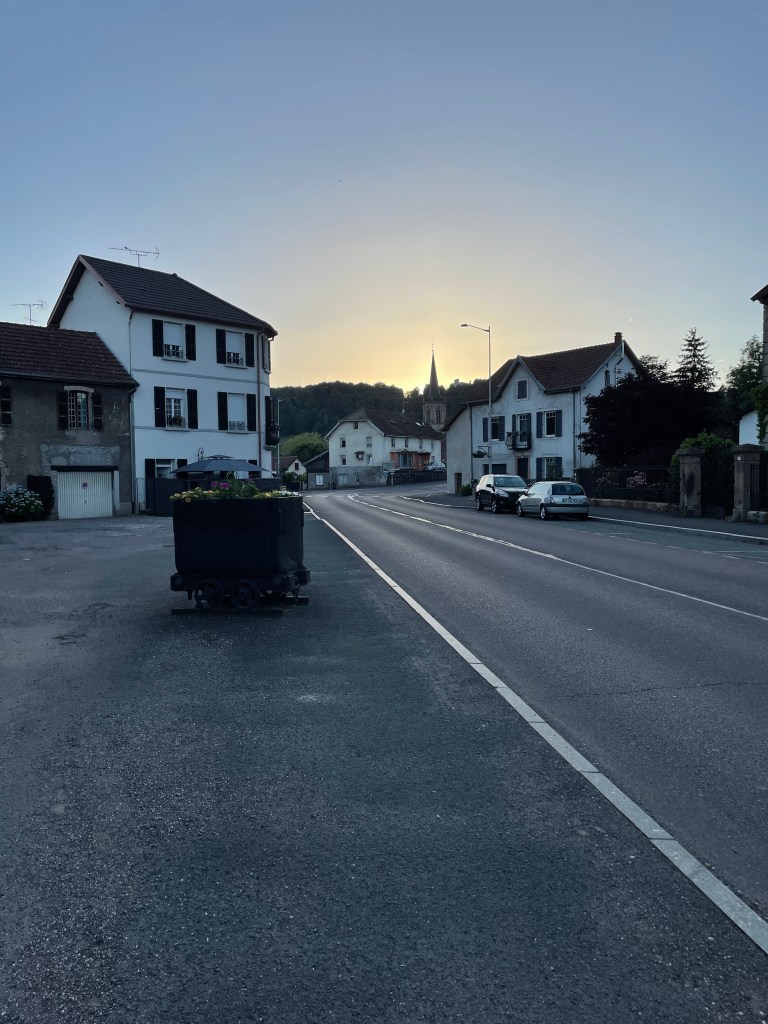
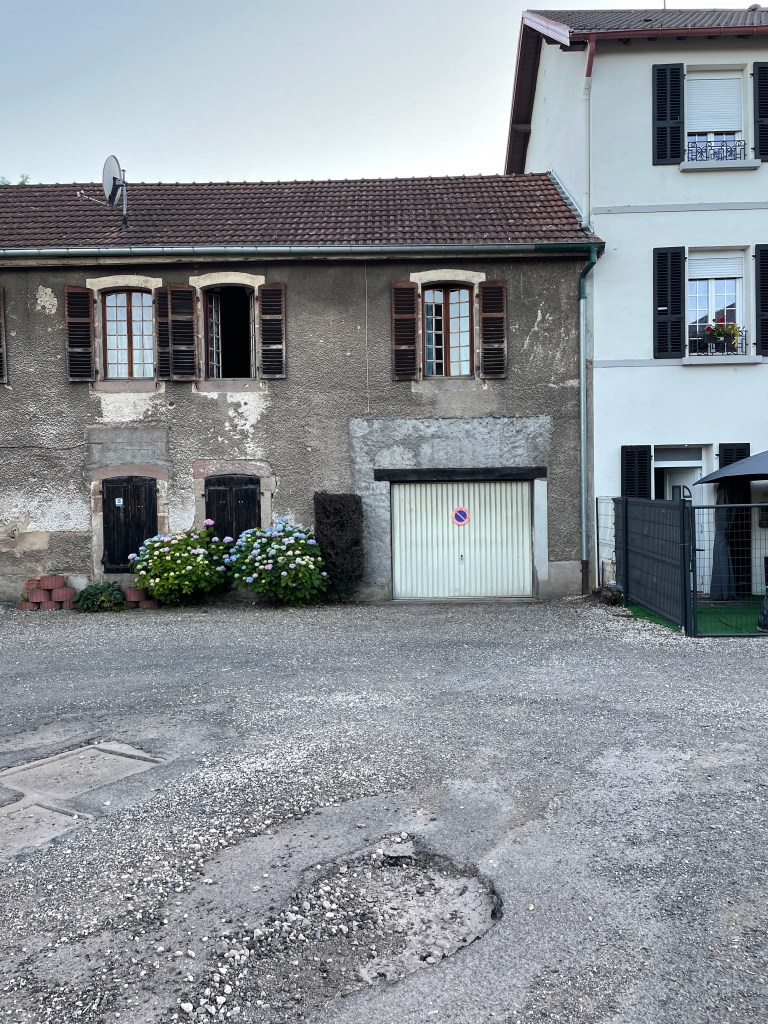

I eat a wonderful goat cheese, honey, and bacon flat bread and walk back home.
The next day I wake up a little late after not having slept hardly at all the night before. I can hear everyone else moving in the BnB, but nothing too loud.
When I go downstairs, Emmanuel’s partner shows me to the dining room. Everyone is seated and eating breakfast. Together. At the same table. Oh god. It’s entirely too early for me to be surprised with socializing with people I don’t know.
But the whole experience is lovely. I apologize for coming down later, I didn’t know we would all be having breakfast together. They laugh and ask where I’m from. I say Memphis, Tennessee. They all cheer! Must be Elvis fans?
Interestingly, this guy and his brother and their wives, all from England, have been to Memphis several times! He used to live there actually, had a horse farm. They are so excited I’m from Memphis and start asking me all kinds of questions. Of course, they talk about the heat. He says he stepped off the plane one time in August at 7:00am and the heat hit him like a sauna. The man at the airport says, “It’s 7:00 in the morning! It’s not even hot!” Yep, sounds about right. They are on a road trip to Northern Italy. I tell them about my trip. The other guy at the table is an architect. Of course.
It’s funny. They were traveling through and came for the bed and breakfast and heard there was a nice chapel in town. The other architect and I came for the exact opposite reason. “It must be like a pilgrimage then?” Yes, of course. That’s exactly what it is.

After breakfast I pack my day pack with my sketchbooks and pens and watercolors, and make my way back up the hill to the chapel. This time I’m a pro. I know not to go down the sketchy wooded trail. Somehow, even though it’s early, I’m sweatier than the day before.
I walk into the visitor’s center and a large group of older people is sitting at the tables and chairs waiting. Oh man, it must be packed today. I show the man my ticket and he says there is going to be a prayer at 11:00. I can still go in, but I have to be quiet. I cannot wait.
I walk up the hill again. Still magnificent today. When I walk in only a few people are inside, and a priest and a few elderly nuns are setting up. I realize this is perhaps more than just a prayer; it’s an entire service.
I sit on one of the wooden benches they set up for the service and wait. Just a few minutes before 11:00 all of the people I saw sitting in the welcome center come in. This is so wonderful. And then the service starts.


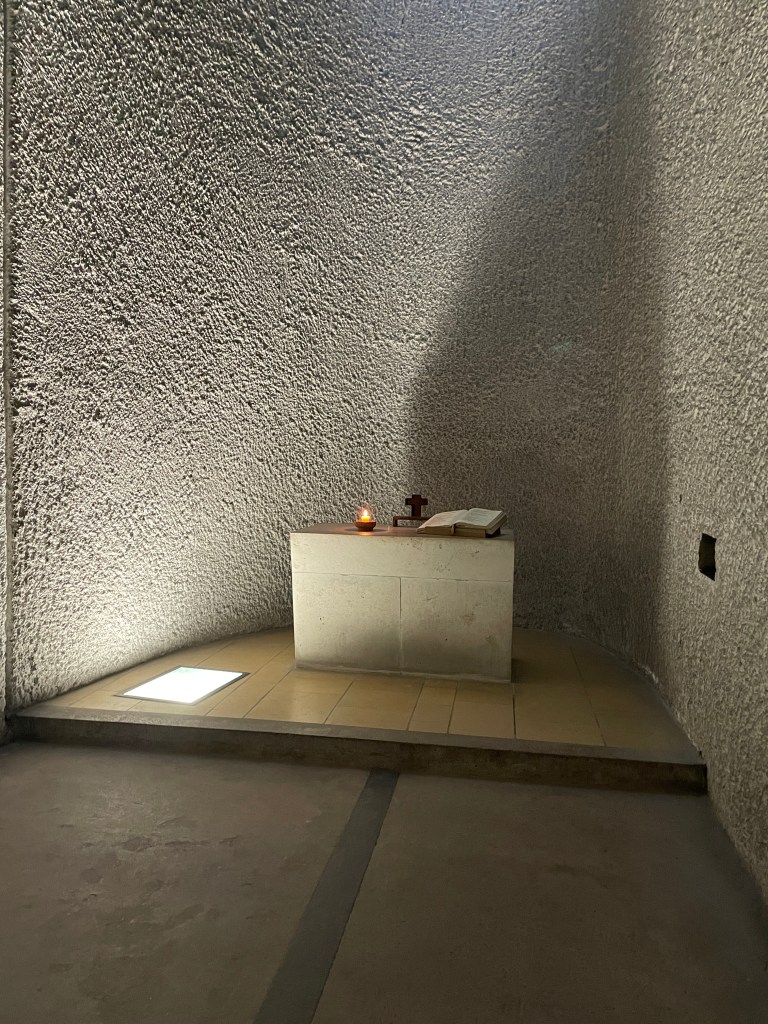
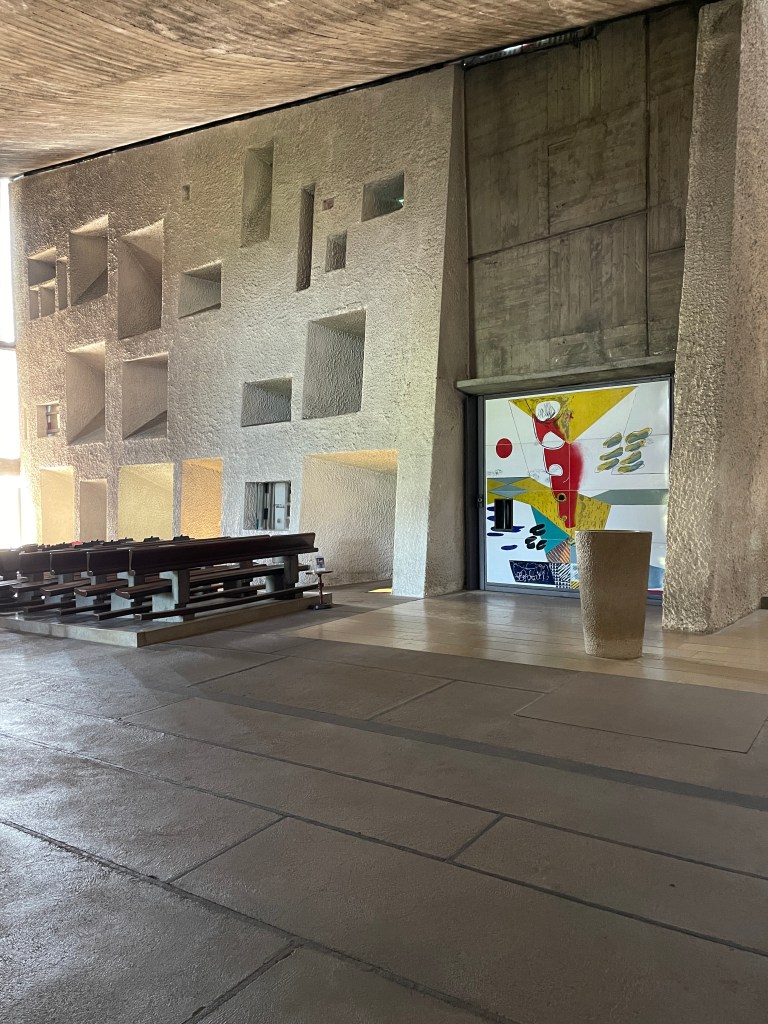
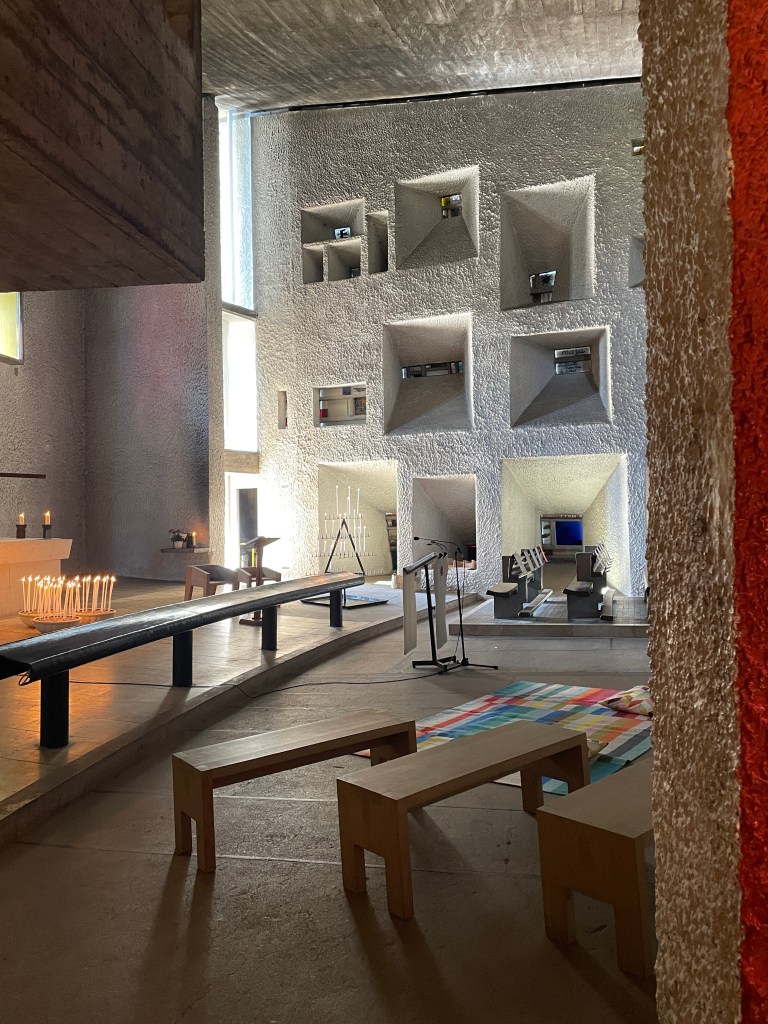
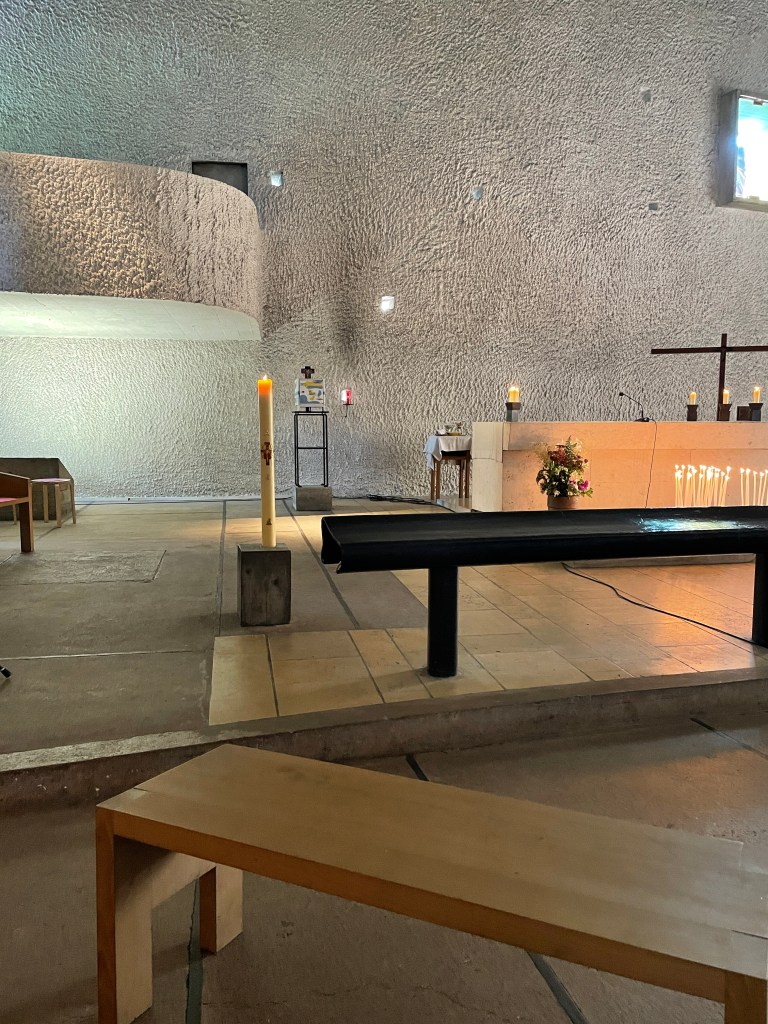
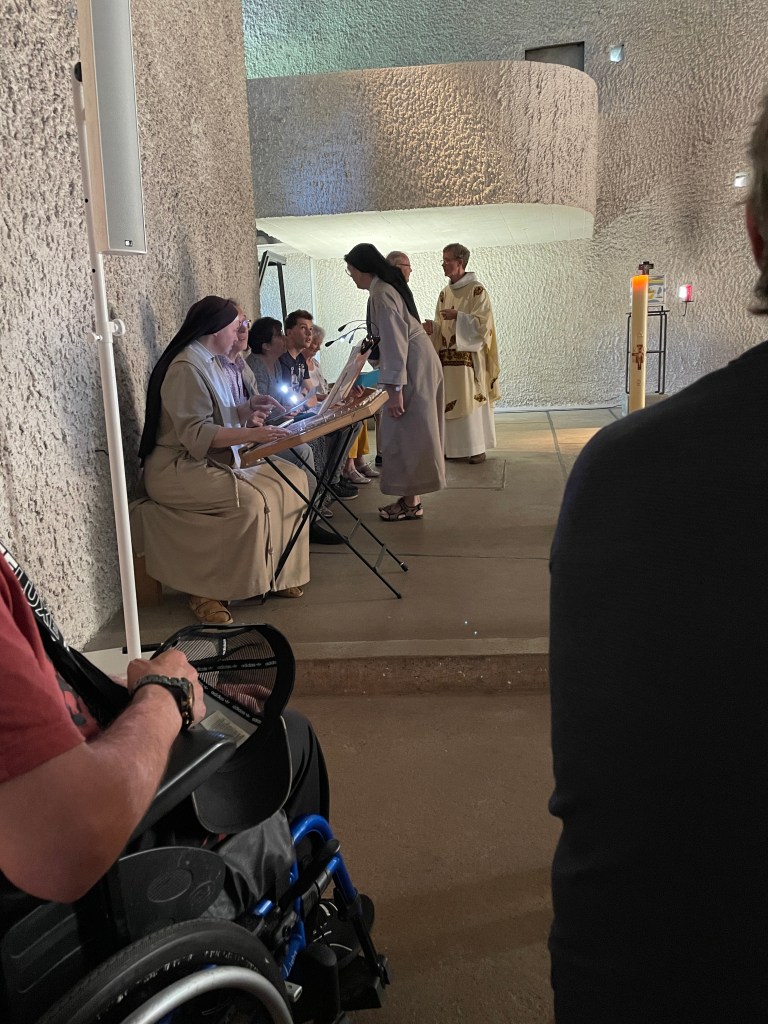
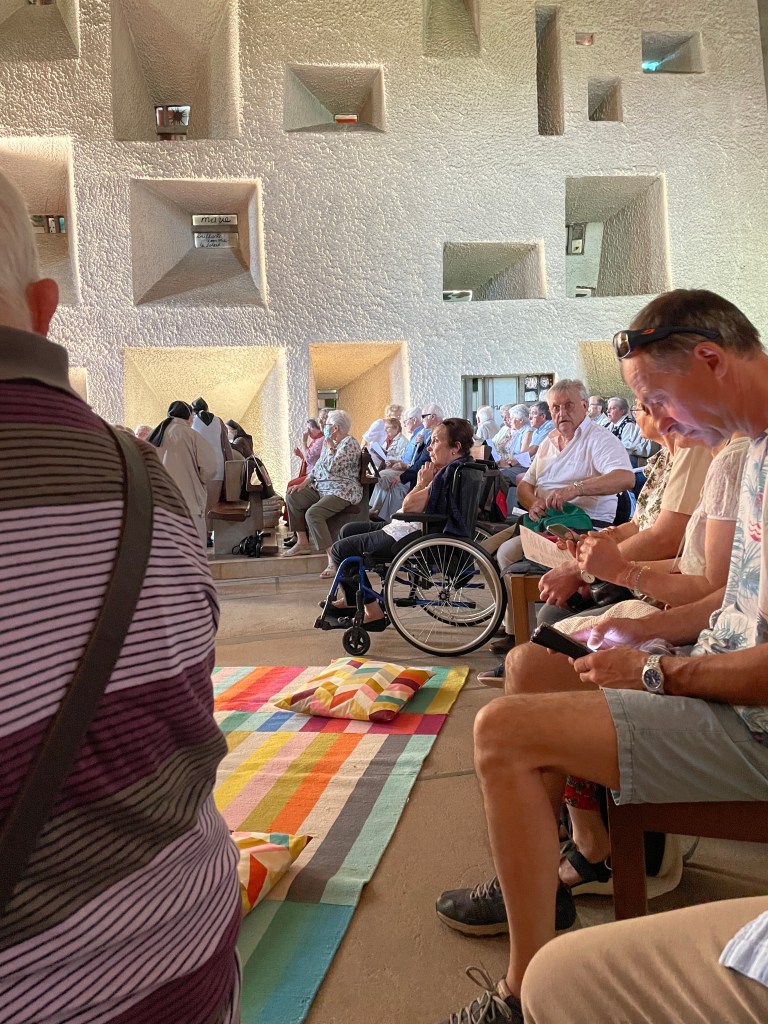
Singing and a sermon in French. I can make out some parts of it. During the reading from the Book of Proverbs, the microphone malfunctions and goes out. It’s so much better without the microphone, the nun’s voice echoing through the space.
The doors are open, and there are no overhead electric lights, only the filtered sunlight through the apertures. No air conditioning, but it’s comfortable. Somehow, perfect. Birds chirping outside during the sermon. Somehow, simultaneously inside and outside. During communion we hear a rooster in the distance.
After the service, everyone meets outside for a picnic on the lawn. How wonderful. The very kind man next to me whispers something to me in French about the picnic. We can’t understand each other, which makes me very sad.
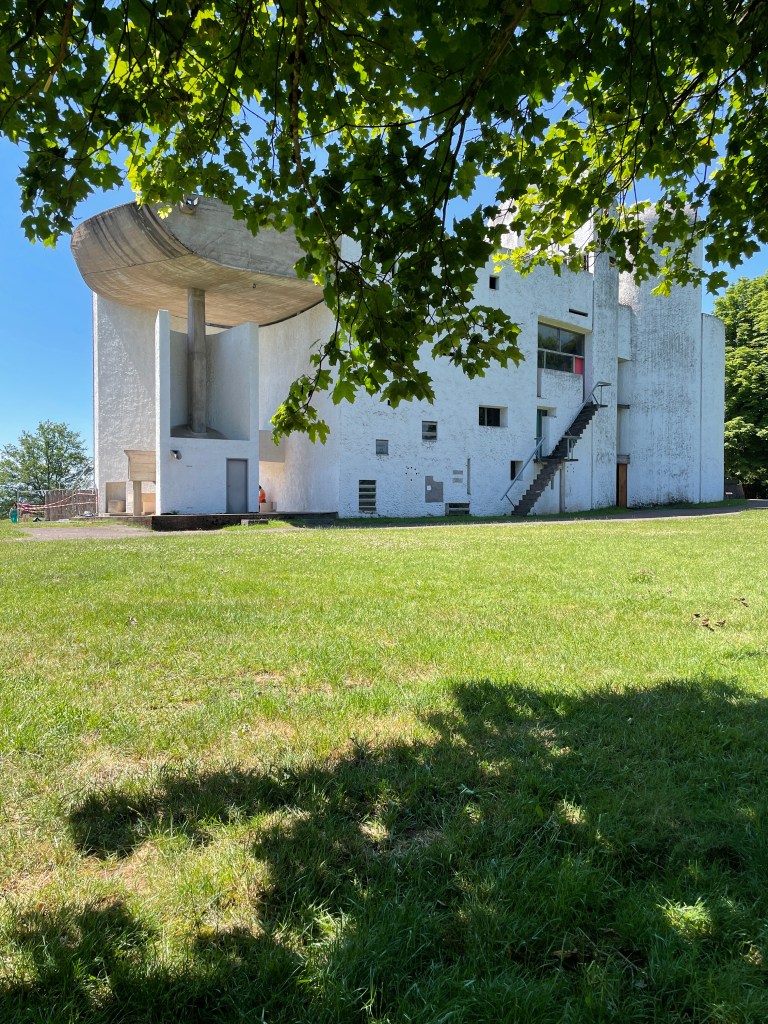


I walk outside and find a shady spot under a tree to write and sketch.
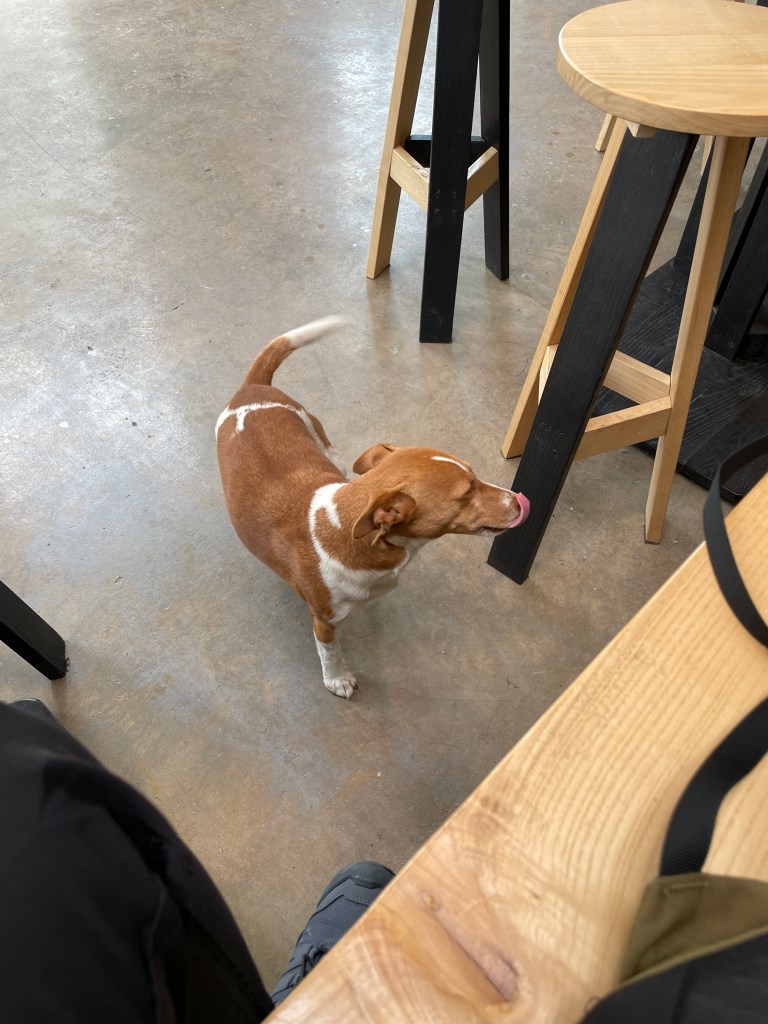
I stay until about 3:00 and make my way back over to the brewery for something to eat. The kitchen is closed, but I can get the charcuterie. I sit and think about how magical this entire day has been. A tiny dog wanders in and hangs out by me for a bit. The music is a mix of Lynyrd Skynyrd, Led Zeppelin, etc. Then “Freefallin'” by Tom Petty comes on. It’s suddenly, officially, the best day. After Tom, I decide I should leave before I ruin it.
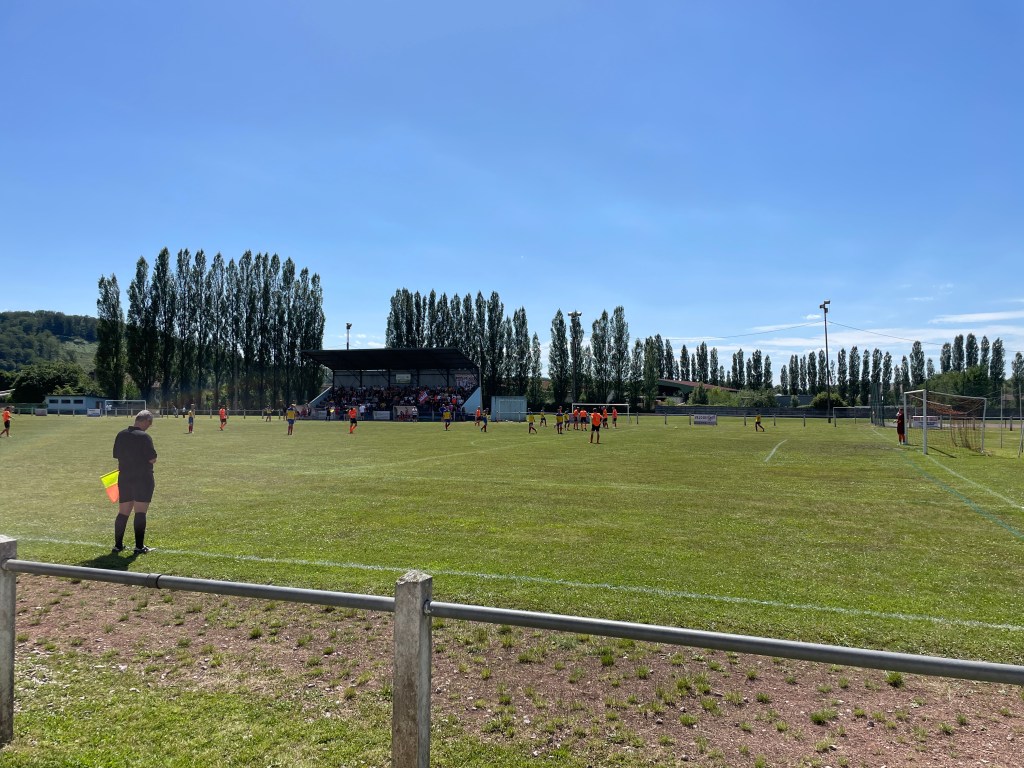
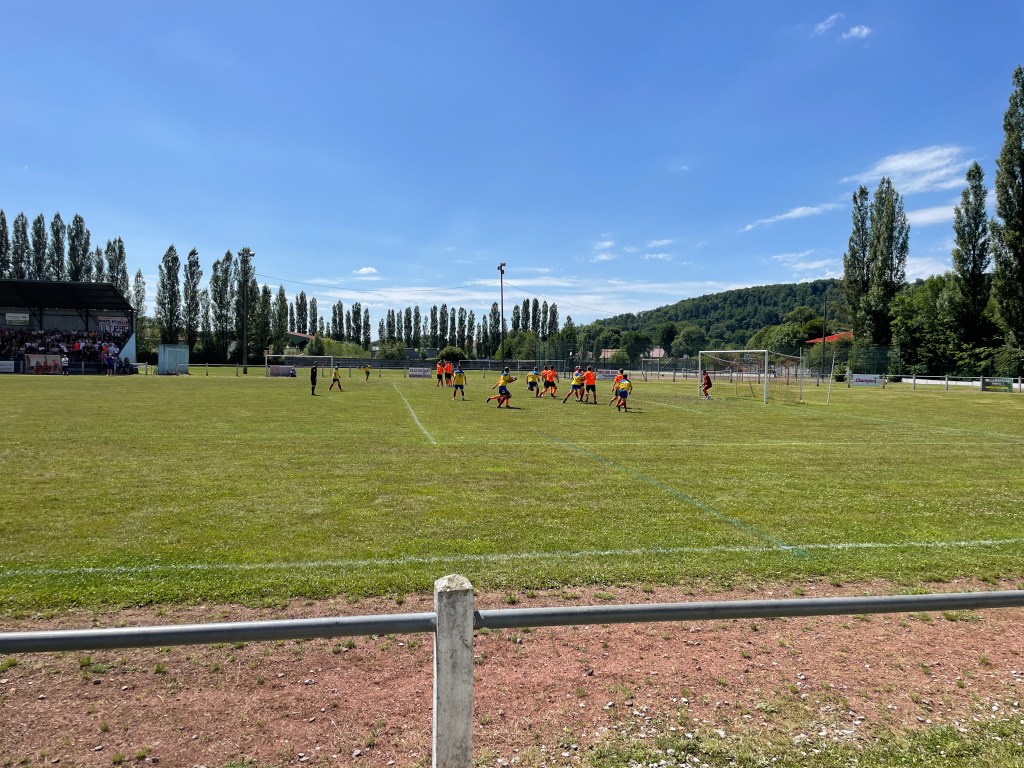
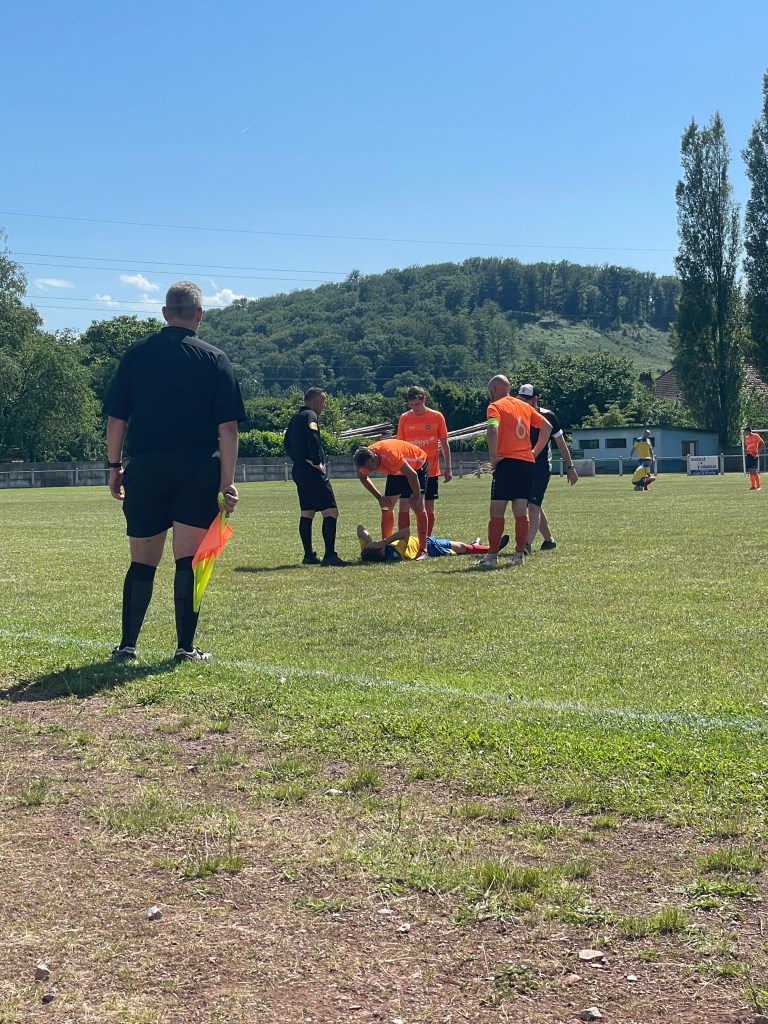
On the way back I hear cheering and chanting. And then a drum. And then a whistle. It’s a soccer game. I follow a road and a sign for a sports complex and watch the game until halftime. Back to my room
The literature the man gave me at the welcome center at Ronchamp says in 1092 there was first mention of a church on the site. In 1944, the chapel was severely damaged during the fight for liberation. And in 1955, the inauguration of the new chapel, designed by Le Corbusier. What a history. A sacred site.
Also from the literature:
“Moved by the landscape, Le Corbusier designed the chapel as “a word addressed to the place”, a white lighthouse in the landscape which attracts the pilgrim on his way. Nature, architecture, and religion have a fundamental relationship. The facades stretch toward nature, and symbols drawn from nature (flower, birds, etc.) and the cosmos exalt the Virgin Mary in the chapel.”
Damn Le Corbusier, you did it. You make me love you, only in this instance.
Each of these architectural pilgrimages seems to have something significant in common. Something I can’t quite describe. Something that reaches to the divine. Something that touches the earth from the spiritual realm, that helps me feel a connection to some universal spirit, something larger than myself, something that makes me feel connected to everything and nothing all at once. Not tied down, but anchored to the earth and the sky and all the living things. “Universal and divine ingredients.”
I saw something on youtube, some scholar talking about Le Corbusier’s Toward an Architecture. He called it a bildungsroman. A word I learned in middle school, a coming of age story. Perhaps it is. Perhaps he had to make it through to give us the Notre Dame du Haut. A giving way to everything he realized later. A letting go of formal principles, and an embracing of a place. Feeling the movement of the forms. Feeling the light filter down through. Something so spiritual, and at the same time, human.
Something to remember. Thanks, Le Corbusier.
 Runnin' Down a Dream